
This post may contain affiliate links.
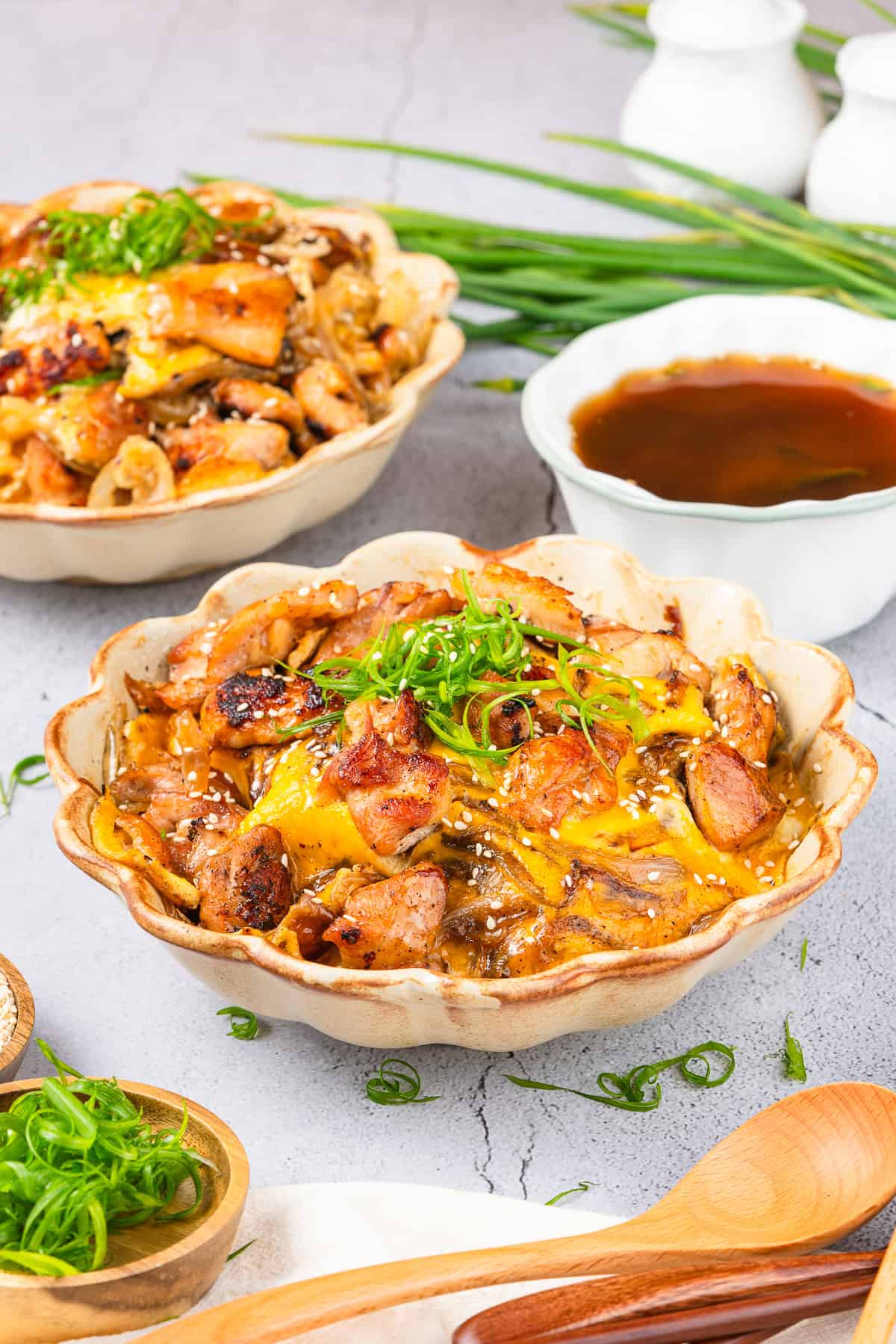
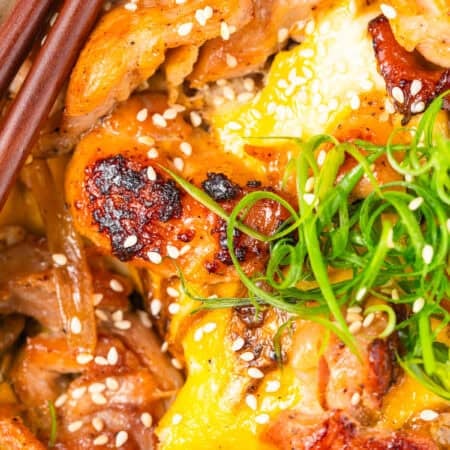
Oyakodon is the ultimate Japanese comfort food, a cozy chicken and egg rice bowl simmered in a savory-sweet sauce and ready in about 35 minutes. I made it on a busy school night and the girls slurped it down faster than any take-out. If you love a quick rice bowl dinner, you will devour this like our beef and broccoli.
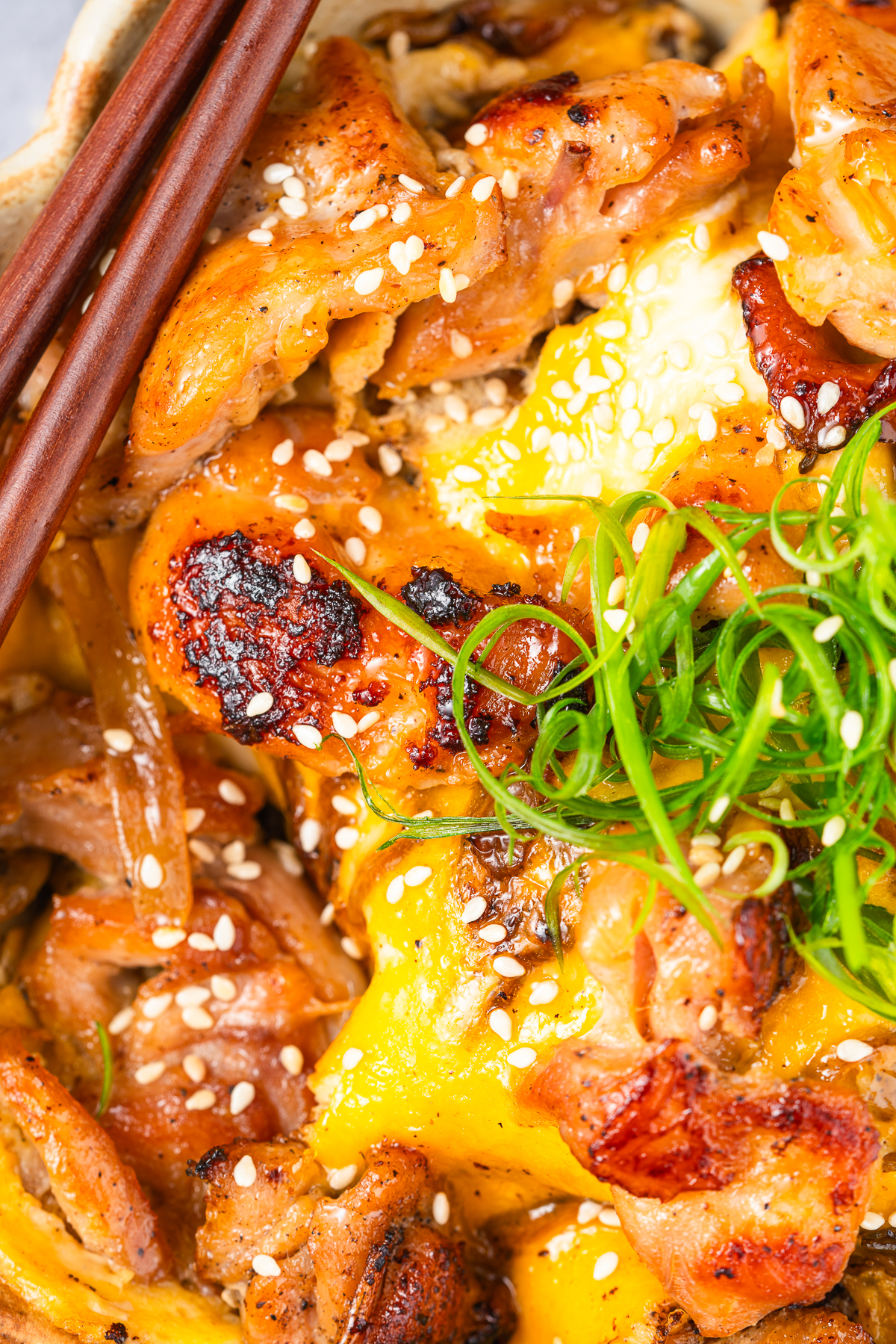
The name means parent and child, a sweet nod to the chicken and egg cooked together in one pan.
Oyakodon Quick Look
- 🕒 Prep Time: 20 minutes
- 🌡️ Cook Time: 15 minutes
- ⏳ Total Time: 35 minutes
- 🍽️ Serving: 2 servings
- ⚡ Calories: 763kcal
- 🌶️ Flavor Profile: Savory, lightly sweet, and umami-rich with silky egg
- ✋ Difficulty: Easy, a quick rice bowl like our Chinese chicken
Quick Answer
Marinate bite-sized chicken thighs in Shaoxing wine, soy sauce, and pepper, then mix a sauce of oyster sauce, mirin, cornstarch, sugar, and water. Sear the chicken, saute sliced onion, then add the chicken and sauce and simmer until it thickens. Pour beaten eggs over the top, cover, and cook just until softly set, then slide it onto a bowl of steamed rice. The whole dish comes together in about 35 minutes for a cozy Japanese chicken and egg rice bowl.
Jump to:
Why This Recipe Works
Click to see the technique science
- Chicken thighs stay juicy. Boneless thighs are forgiving and stay tender and flavorful even after simmering in the sauce.
- A quick marinade adds depth. A short soak in Shaoxing wine and soy seasons the chicken all the way through.
- Cornstarch thickens the sauce. A little cornstarch gives the sauce that glossy, clingy texture that coats every bite.
- Cook the egg gently. Pouring the beaten eggs in at the end and pulling the pan off early keeps them silky and just-set, never rubbery.
- Single portions plate best. Cooking one bowl at a time keeps the egg soft and the presentation neat for that restaurant look.
Why You’ll Love This Recipe
- It comes together in about 35 minutes for a fast, cozy dinner.
- It is a one-pan meal that tastes just like your favorite Japanese spot.
- It is a cozy weeknight take-out fix, right alongside our better-than-take-out beef and broccoli.
- It delivers that same everyone asks for seconds energy as our spanish rice recipe from scratch.
- It delivers that same everyone asks for seconds energy as our cauliflower fried rice with chicken.
- It earns a spot in the rotation right next to our greek chicken bowls recipe.
Key Ingredients
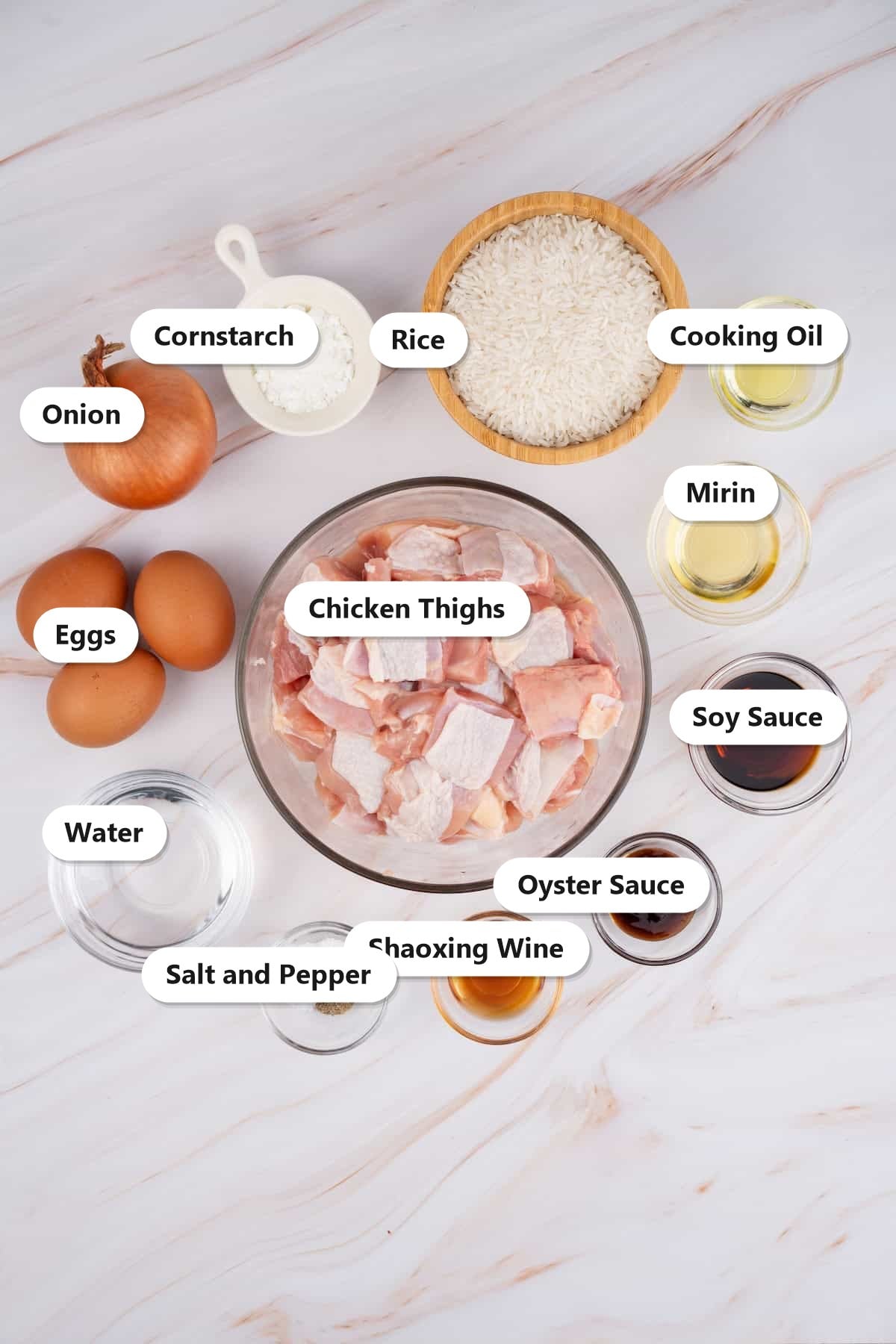
A handful of pantry sauces plus chicken, eggs, and onion are all you need. Here is what goes in.
- Boneless Chicken Thighs: Cut into bite-sized pieces, they stay juicy and soak up the sauce.
- Eggs: Beaten just lightly and poured on at the end for that signature soft, silky finish.
- Onion: Sliced and simmered until sweet and tender.
- Soy Sauce, Oyster Sauce, and Mirin: The savory-sweet trio that builds the umami-rich sauce.
- Cornstarch and Shaoxing Wine: Cornstarch thickens the sauce while the wine seasons the chicken.
See recipe card for exact quantities.
Variations and Substitutions
Easy ways to adapt this rice bowl.
- Go traditional: swap the oyster sauce and Shaoxing wine for dashi, soy sauce, and sake for a more classic Japanese flavor.
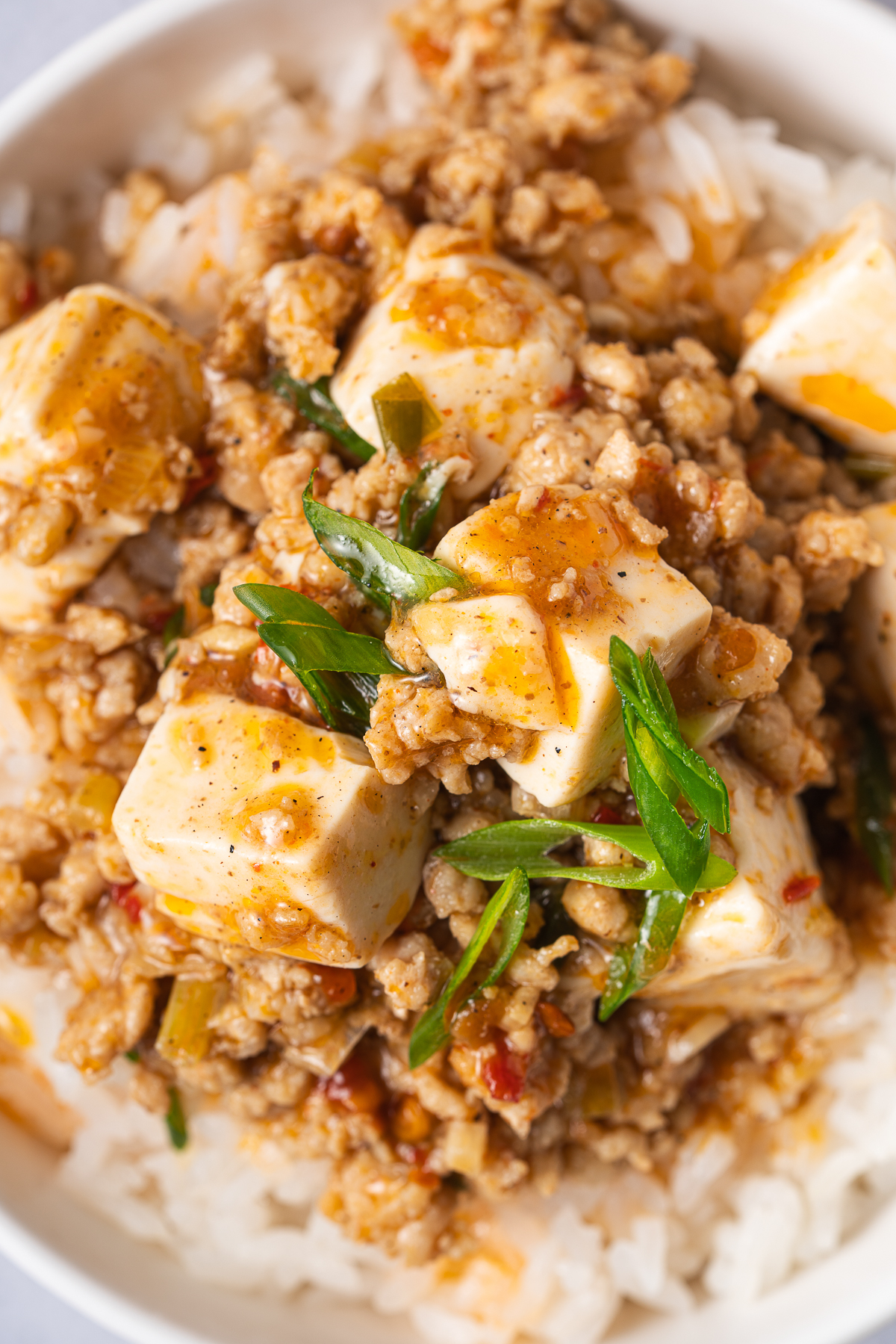
- Make it your own: this same method works with thinly sliced pork or even tofu, like our mapo tofu.
- Add veggies: toss in mushrooms, snap peas, or spinach with the onion for extra color and nutrition.
- Spice it up: add a drizzle of chili oil or a pinch of togarashi for heat.
- Extra saucy: double the sauce if you love plenty to soak into the rice.
- If you want to switch things up, our greek chicken bowls plays on similar flavors in a whole new way.
- If you want to switch things up, our thai pad see ew plays on similar flavors in a whole new way.
- In the mood for something different? Our better than takeout chicken fried rice scratches a similar itch.
How to Make Oyakodon
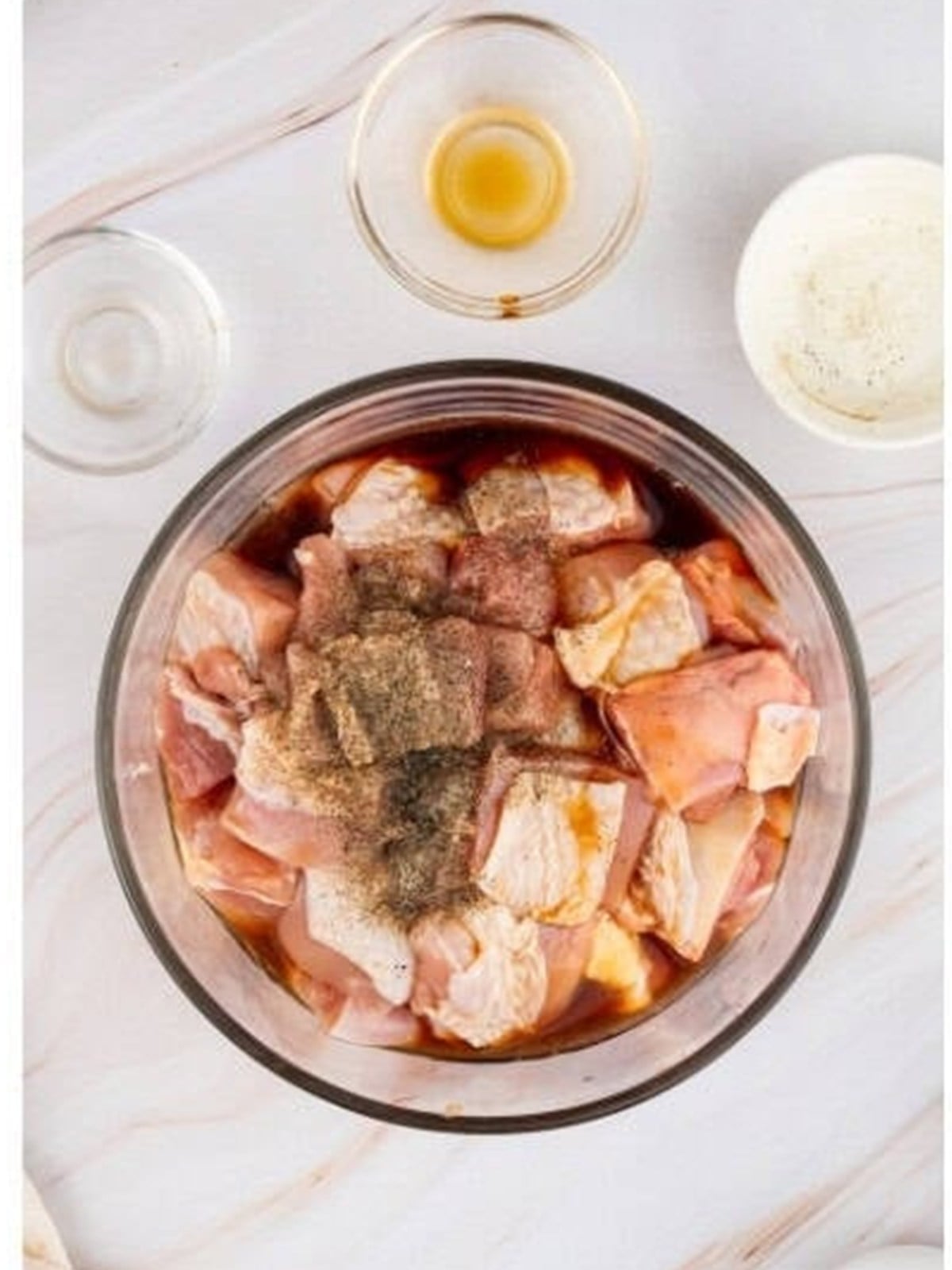
- Add the Shaoxing wine, soy sauce, and black pepper to the bite-sized chicken thighs, massage it in, and let them marinate for 20 minutes.
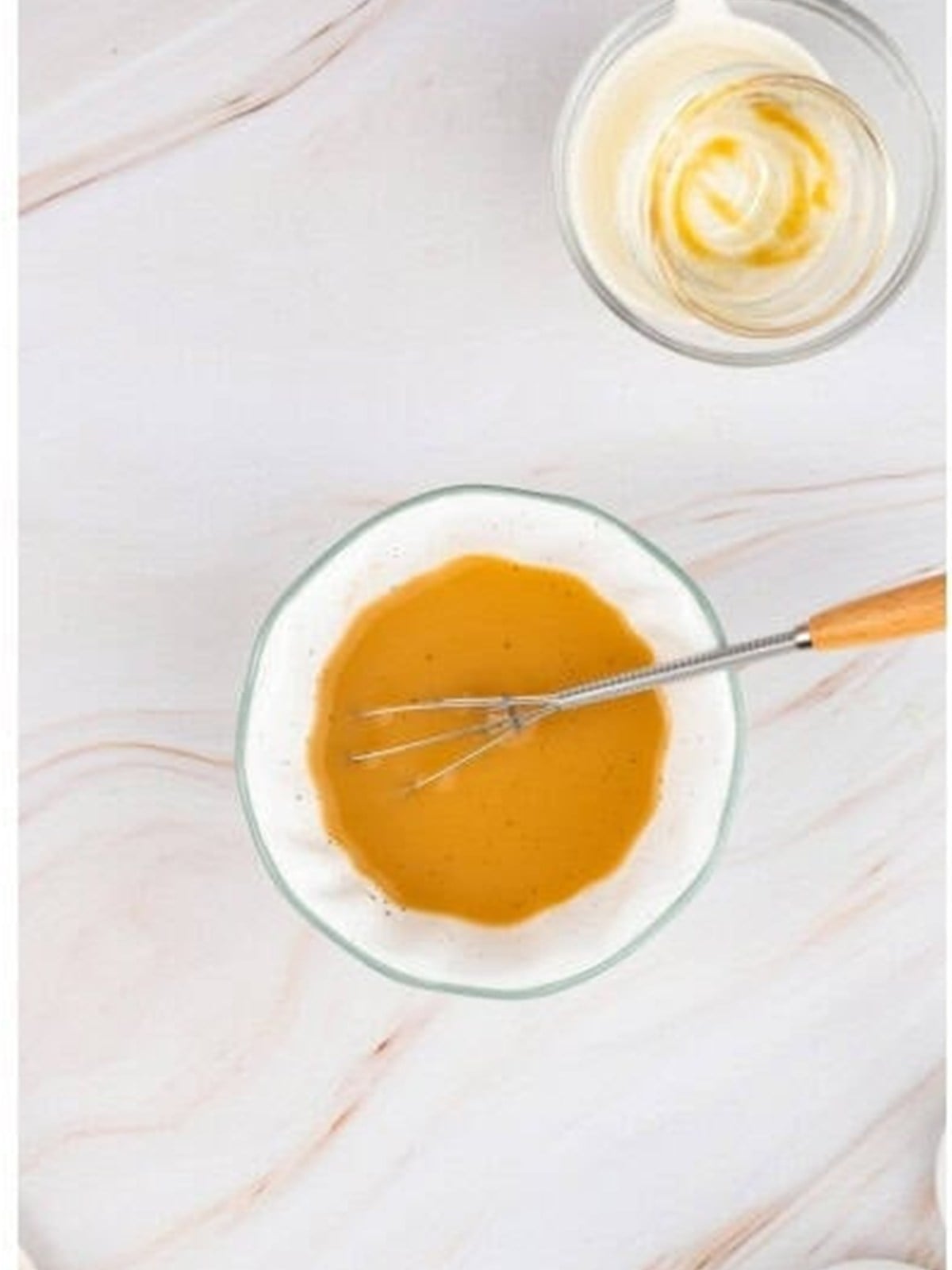
- In a small bowl, stir together the oyster sauce, cornstarch, mirin, sugar, water, and a little salt and pepper until well combined.
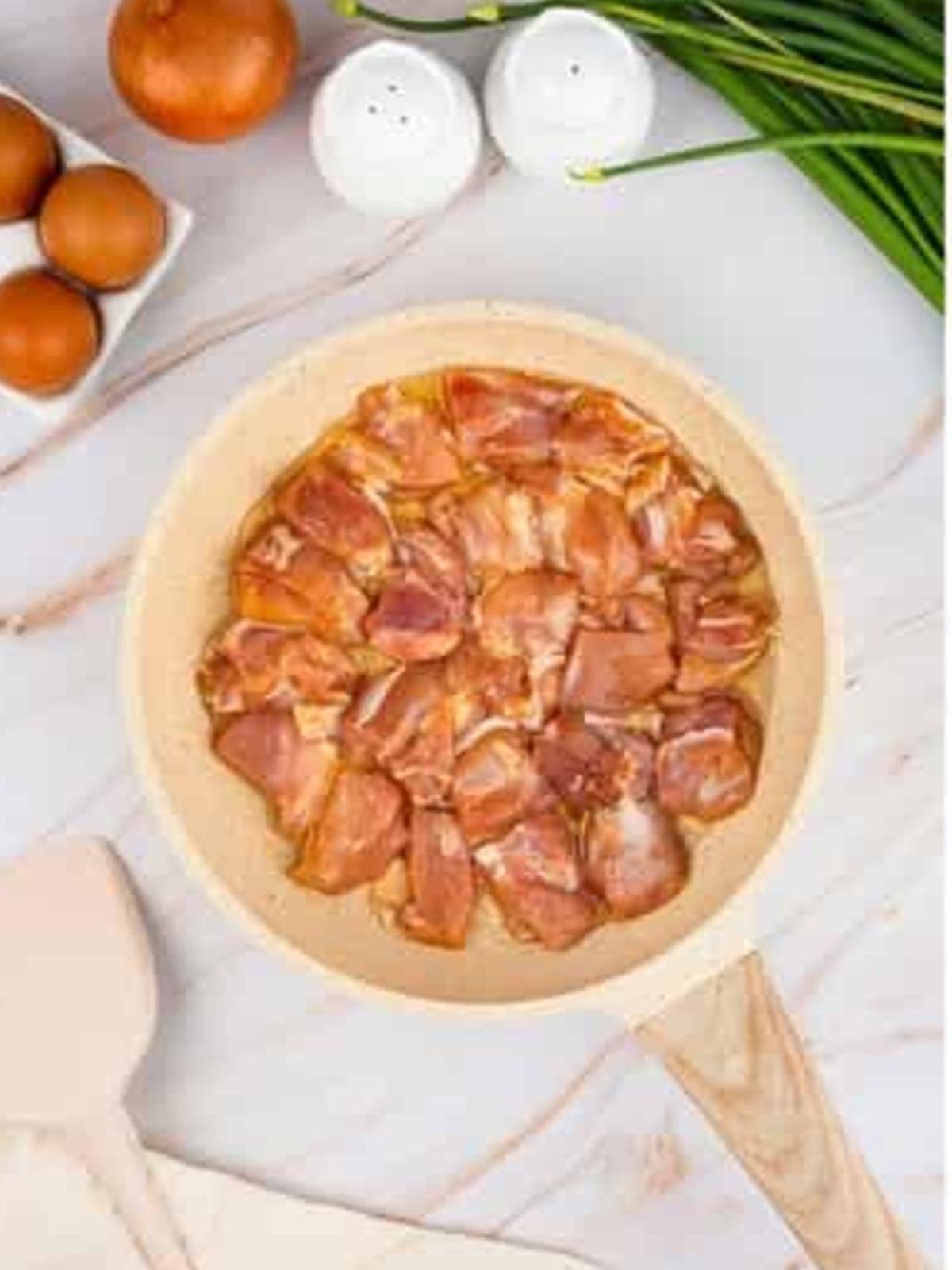
- Heat the cooking oil in a pan over medium-high heat and sear the marinated chicken until golden and cooked through, about 6 to 8 minutes, then set it aside.
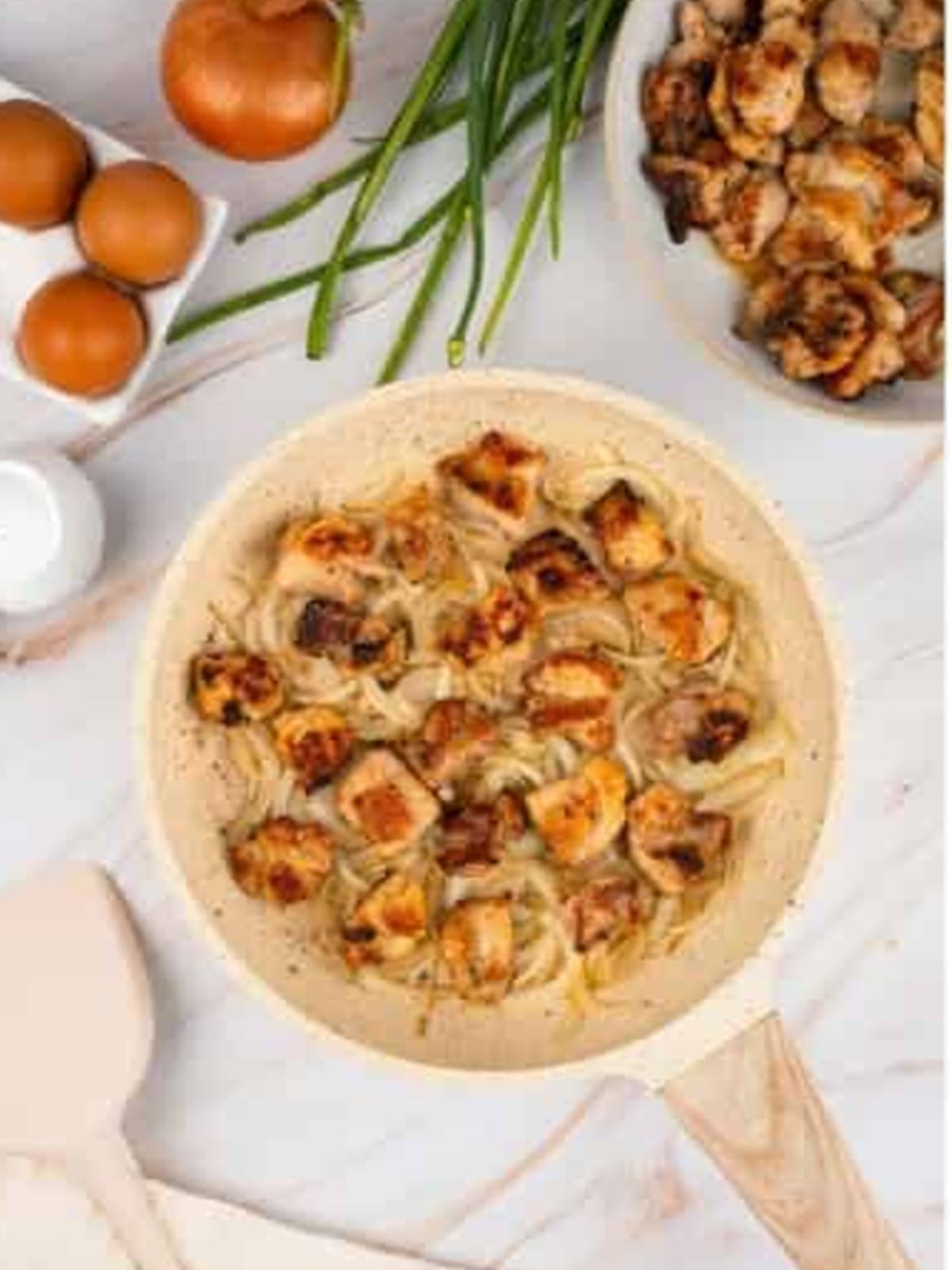
- Add the sliced onion to the pan and saute for 2 minutes, then return the chicken with the sauce and bring it to a simmer until it thickens.
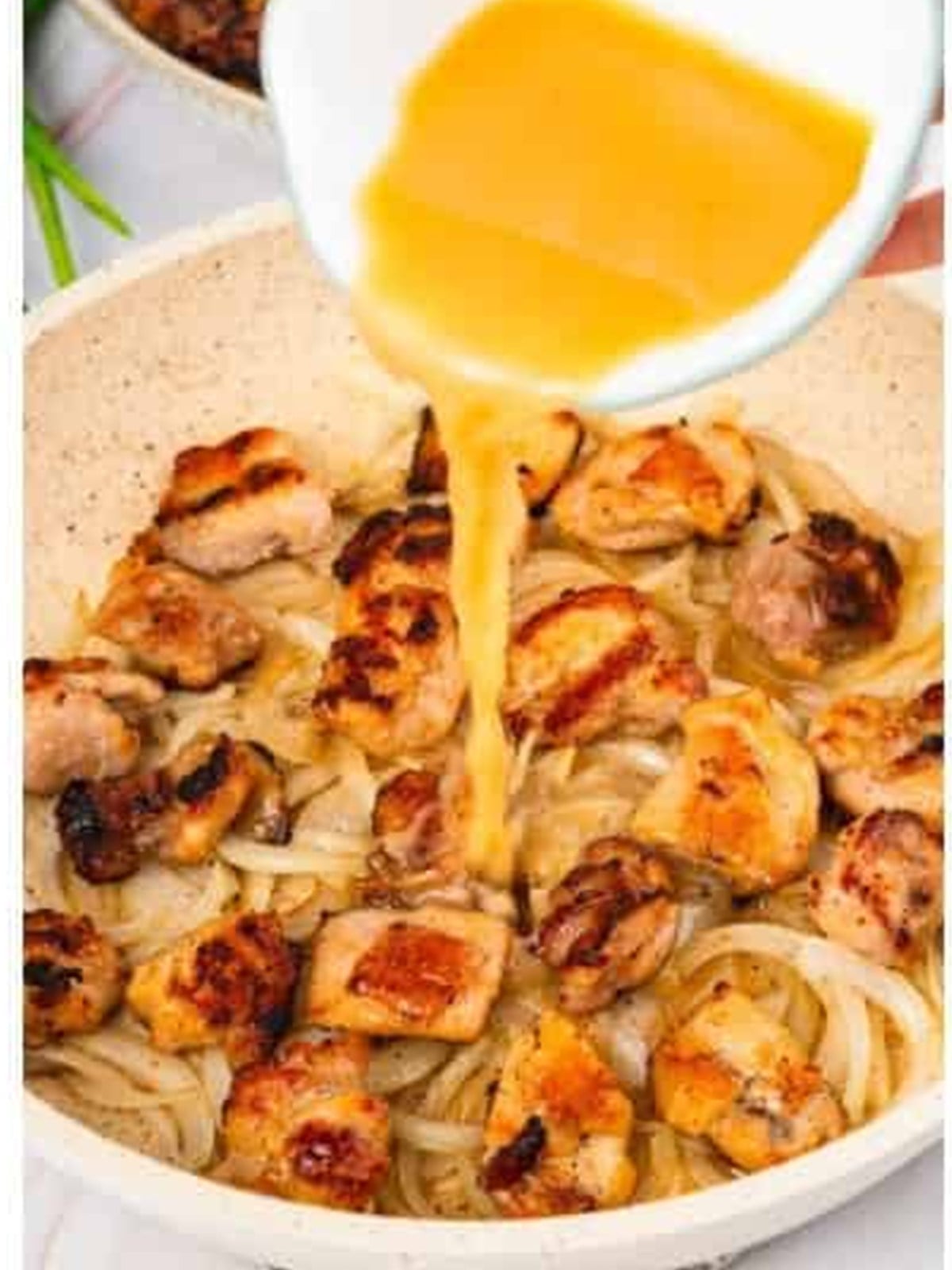
- Pour the beaten eggs evenly over the chicken and onion, reduce the heat to low, cover, and cook 1 to 2 minutes until the eggs are softly set.
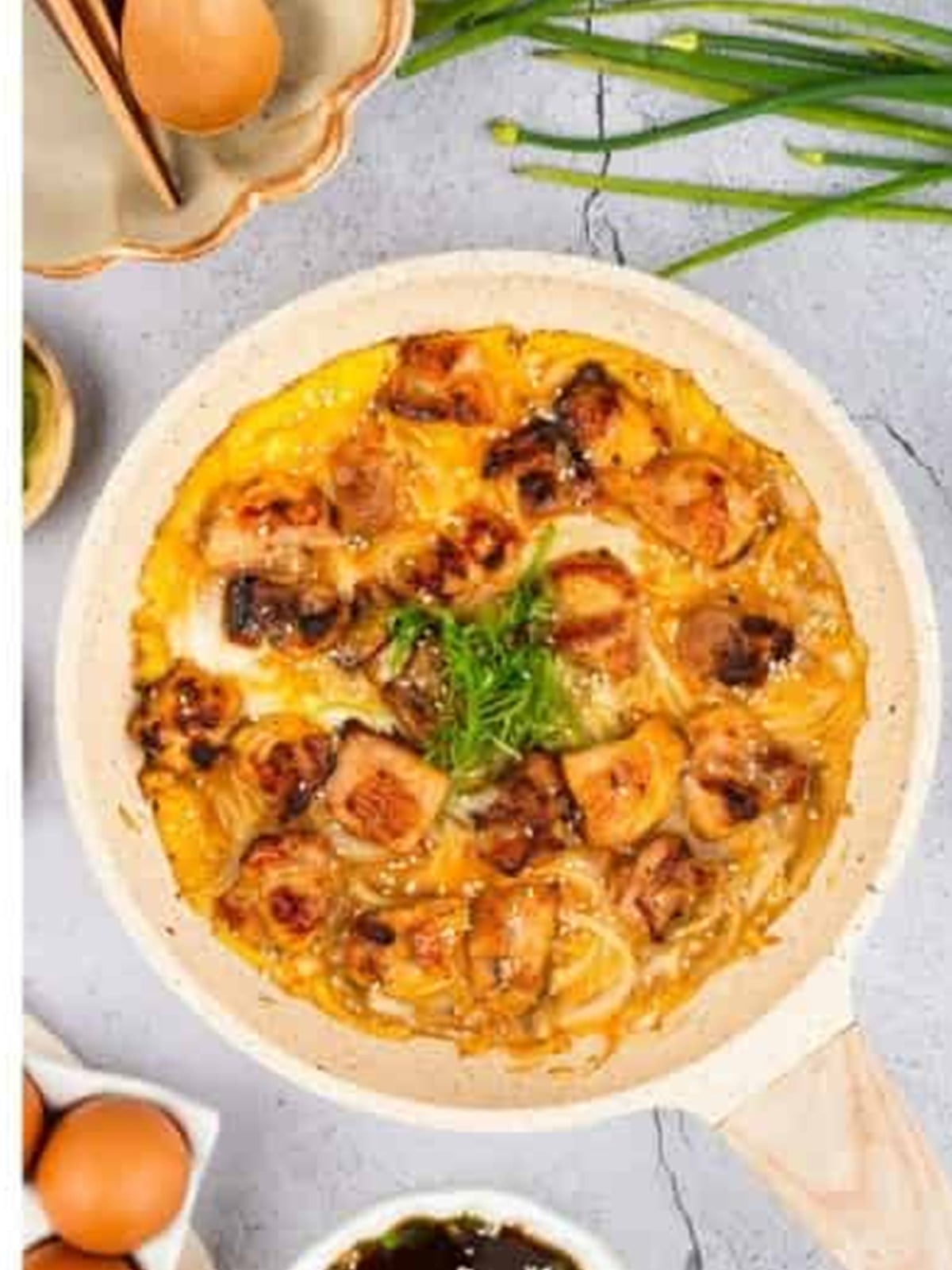
- Gently slide the oyakodon onto a bowl of steamed rice, drizzle any extra sauce over the top, and garnish with green onion and sesame seeds.
Recipe Tips & Tricks
- Do not overcook the egg. Pull it off the heat while the egg is still soft and slightly runny; the residual heat finishes it into that silky, just-set texture oyakodon is known for.
- Cook in single portions. Making one bowl at a time keeps the egg soft and the presentation pretty, just like at a restaurant.
- Use short-grain rice. Sticky Japanese-style rice holds the sauce best and gives the most authentic bowl.
- Slice the chicken evenly. Bite-sized, uniform pieces cook quickly and at the same rate.
- Do not skip the marinade. Even 20 minutes makes the chicken noticeably more flavorful.
- Keep the egg loose. Beat the eggs just until streaky, not fully blended, for the classic soft texture.
- Plan the whole menu. This pairs effortlessly with our copycat chipotle bowl recipe when company is coming.
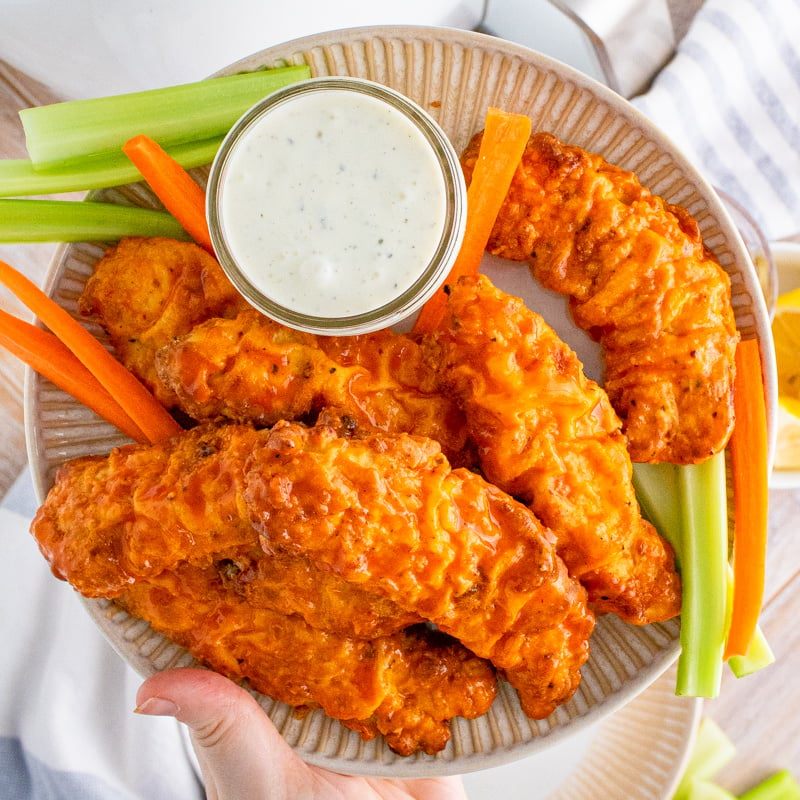
- Plan the whole menu. This pairs effortlessly with our buffalo chicken egg rolls when company is coming.
- Make it a full spread. Our teriyaki chicken fried rice rounds out the table.
Serving Ideas and Suggestions
Serve oyakodon hot over a bowl of steamed short-grain rice, spooning all that savory sauce on top, with chopped green onion and a sprinkle of sesame seeds.
And if you want one more idea for the table, our Asian glazed salmon never misses.
Oyakodon FAQs
Oyakodon is a classic Japanese rice bowl of chicken and egg simmered in a savory-sweet sauce and served over steamed rice. The name means parent and child, a playful reference to the chicken and egg.
Boneless, skinless chicken thighs are ideal because they stay juicy and tender. You can use chicken breast, but watch it closely so it does not dry out.
Yes. Substitute a tablespoon of dry sherry or rice vinegar with a pinch of sugar, or a splash of white wine with sugar, to mimic mirin’s sweet tang.
Pour the beaten eggs in at the very end, cover, and cook just 1 to 2 minutes over low heat. Pull the pan off while the egg still looks slightly underdone; it will finish from the residual heat.
Short-grain Japanese rice is traditional and holds the sauce best, but any steamed white or jasmine rice works in a pinch.
It is best fresh since the egg is so delicate, but you can marinate the chicken and mix the sauce ahead. Cook it just before serving for the silkiest egg.
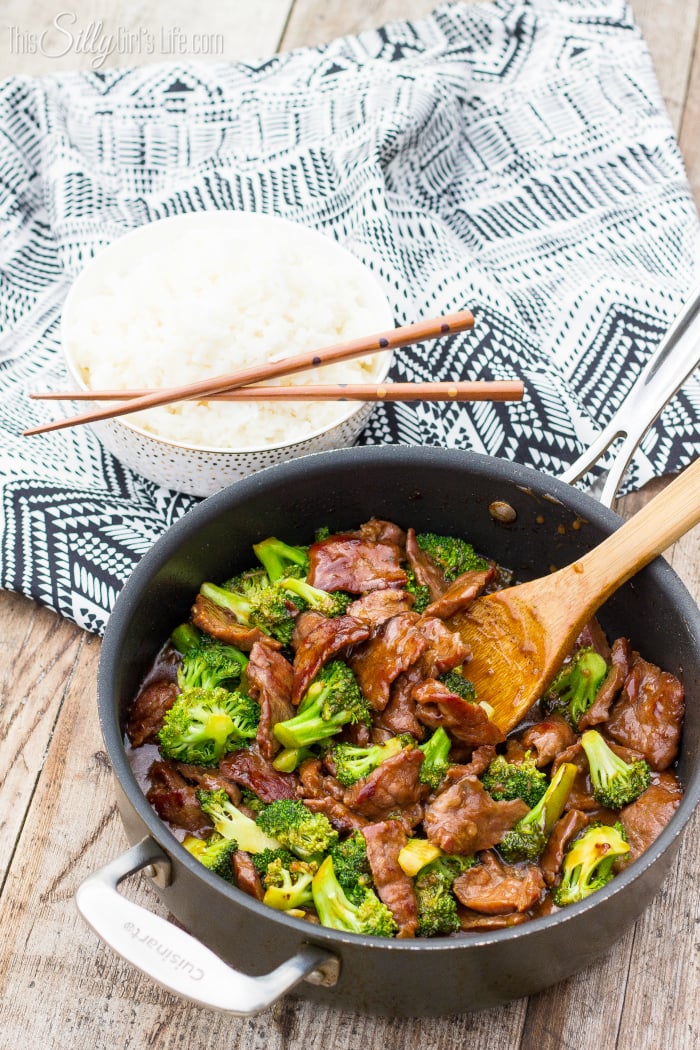
Craving more cozy rice bowls? Try our beef and broccoli over rice next.
If you love egg dishes, our Chinese steamed eggs are a must-make.

Oyakodon (Chicken and Egg Rice Bowl)
Ingredients
- 2 teaspoons Shaoxing wine
- 2 tablespoons light soy sauce
- ½ teaspoon black pepper
- 1 pound boneless chicken thighs
- 2 teaspoon oyster sauce
- 2 teaspoon cornstarch
- 2 teaspoon mirin
- ¼ teaspoon sugar
- ¼ cup water
- Salt and pepper to taste
- 3 large eggs
- 2 tablespoons Cooking oil
- ½ cup sliced onion
- Cooked rice to serve
Instructions
Marination of the chicken:
- In a bowl, add Shaoxing wine, light soy sauce, and black pepper to the chicken thighs. Massage and cover the bowl with plastic wrap.2 teaspoons Shaoxing wine, 2 tablespoons light soy sauce, ½ teaspoon black pepper, 1 pound boneless chicken thighs
- Allow the chicken to marinate for 20 minutes.
Preparation of sauce and egg:
- In a small bowl, mix oyster sauce, cornstarch, mirin, sugar, water, and salt and pepper (to taste). Stir until well combined.¼ cup water, 2 teaspoon oyster sauce, 2 teaspoon cornstarch, 2 teaspoon mirin, ¼ teaspoon sugar, Salt and pepper to taste
- For the egg mixture, crack the eggs into a bowl and beat them lightly. Do not overbeat; keeping some egg whites clumped together is ideal.3 large eggs
Cooking marinated chicken:
- Heat cooking oil in a pan over medium-high heat.2 tablespoons Cooking oil
- Once hot, place the marinated chicken with the skin side down.
- Cook until golden brown, then flip and cook the other side. Ensure both sides are browned and fully cooked; this usually takes 6-8 minutes.
- Remove the chicken from the pan and set it aside on a plate.
- To cook a single portion, add sliced onion to the same pan and saute for 2 minutes until softened. TIP: I highly recommend cooking oyakodon in single portions for the best presentation.½ cup sliced onion
- Add half of the cooked chicken to the pan, followed by half of the sauce. Bring to a simmer over medium-high heat.
- Continue to cook for another 1 minute or until the sauce begins to thicken.
- Pour half of the beaten eggs evenly over the chicken. Reduce heat to low, cover with a lid, and cook for 1-2 minutes. Keep an eye on the eggs—they should be soft and slightly runny for the best texture.
- Gently slide onto a bowl of rice.Cooked rice
- Drizzle any excess sauce over the rice.
- Garnish with chopped green onions and roasted sesame seeds. Serve immediately.
- Repeat the cooking steps for the second portion.
Notes
- Cut into bite-sized pieces – Small, bite-size chicken cooks evenly and soaks up the sauce better.
- Beat eggs gently – Leave some egg whites clumped together for the soft egg texture.
- Don’t overcook the eggs – Cook just until the eggs are silky and still a little runny.
- Use a small pan with a lid – Cooking in single portions helps with even heat and smooth serving.
- Swap water with dashi stock – For a more traditional oyakodon, use dashi stock instead of water.
- Use medium heat – Avoid too high a temperature so the sauce doesn’t reduce too quickly or burn.
Nutrition
Love This Recipe?
Follow @ThisSillyGirlsKitchen on Instagram and @ThisSillyGirlsKitchen on Pinterest for more!








This was so much fun to make and tasted even better than it looks.