

This post may contain affiliate links.
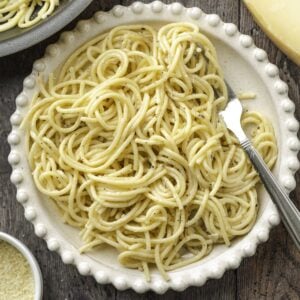
Cacio e Pepe is proof that four ingredients and 25 minutes can beat any takeout pasta, just spaghetti, butter, freshly grated Parmesan, and toasted black pepper tossed with starchy pasta water until it turns glossy and creamy. Think of it as the grown up version of the buttered noodles every kid loves. If our spaghetti aglio e olio is already in your rotation, this is its cheesy Roman cousin.
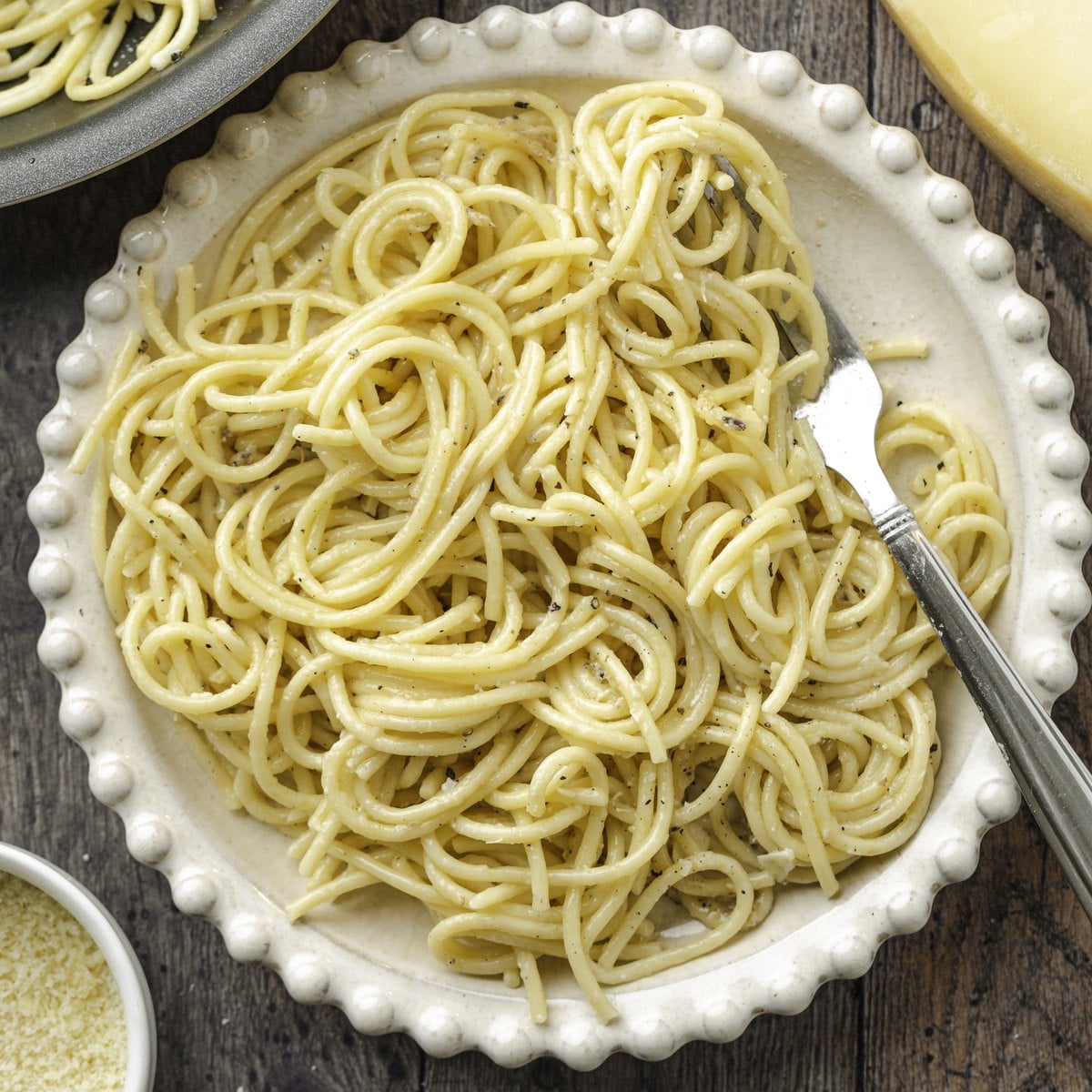
Grab a big skillet, a fine grater, and a mug for that pasta water, and dinner is basically done.
Cacio e Pepe Quick Look
- 🕒 Prep Time: 5 minutes
- 🌡️ Cook Time: 20 minutes
- ⏳ Total Time: 25 minutes
- 🍽️ Serving: 3 servings
- ⚡ Calories: 440kcal
- 🌶️ Flavor Profile: Rich, nutty Parmesan with a warm, peppery kick and a silky butter finish
- ✋ Difficulty: Easy, and even simpler than our easy penne Alfredo
Quick Answer
Cook 6 ounces of spaghetti until al dente and save 1 to 2 cups of the pasta water before draining. Melt 2 tablespoons of butter in a skillet over medium heat and toast 1 teaspoon of freshly ground black pepper for about a minute. Add 1/2 cup of the pasta water, the drained spaghetti, and 1 more tablespoon of butter. Lower the heat, sprinkle in 1 cup of finely grated Parmesan, and toss until it melts into a silky sauce, adding splashes of pasta water as needed. Serve right away.
Jump to:
- Cacio e Pepe Quick Look
- Quick Answer
- Why This Recipe Works
- Why You’ll Love This Recipe
- Key Ingredients
- Variations and Substitutions
- How to Make Cacio e Pepe
- Recipe Tips & Tricks
- Serving Ideas and Suggestions
- Cacio e Pepe FAQs
- Other Recommended Easy Pasta Recipes
- Easy Cacio e Pepe (Butter, Parmesan and Black Pepper Pasta)
Why This Recipe Works
Click to see the technique science
- Starchy pasta water is the secret sauce. The starch that cooks out of the spaghetti helps the butter and cheese blend into a smooth, creamy sauce instead of a greasy puddle. It is the whole trick, so never pour it all down the drain.
- Toasting the pepper wakes it up. A minute in hot butter blooms the black pepper, so it tastes warm and aromatic instead of dusty and sharp.
- Low heat keeps the cheese silky. Parmesan melts smoothly over gentle heat. Crank the burner and the cheese tightens into clumps, so the heat goes down right before the cheese goes in.
- Finely grated cheese melts fast. A fine grater turns the Parmesan into fluffy shreds that melt almost on contact, which is how you get a sauce with no lumps.
- Butter goes in at two stages. Some butter toasts the pepper, and the last tablespoon goes in with the pasta, so the sauce tastes rich and rounded without feeling heavy.
- Fewer ingredients means every one shines. With only four ingredients there is nothing to hide behind, so good Parmesan and fresh pepper make a huge difference in every bite.
Why You’ll Love This Recipe
- It takes four ingredients you probably already have, which makes it the ultimate nothing in the fridge dinner.
- It is on the table in 25 minutes, faster than delivery and a lot cheaper than the restaurant version, and it pairs with almost any protein, like our creamy lemon shrimp.
- It feels fancy enough for a date night but is easy enough for a Tuesday.
Key Ingredients
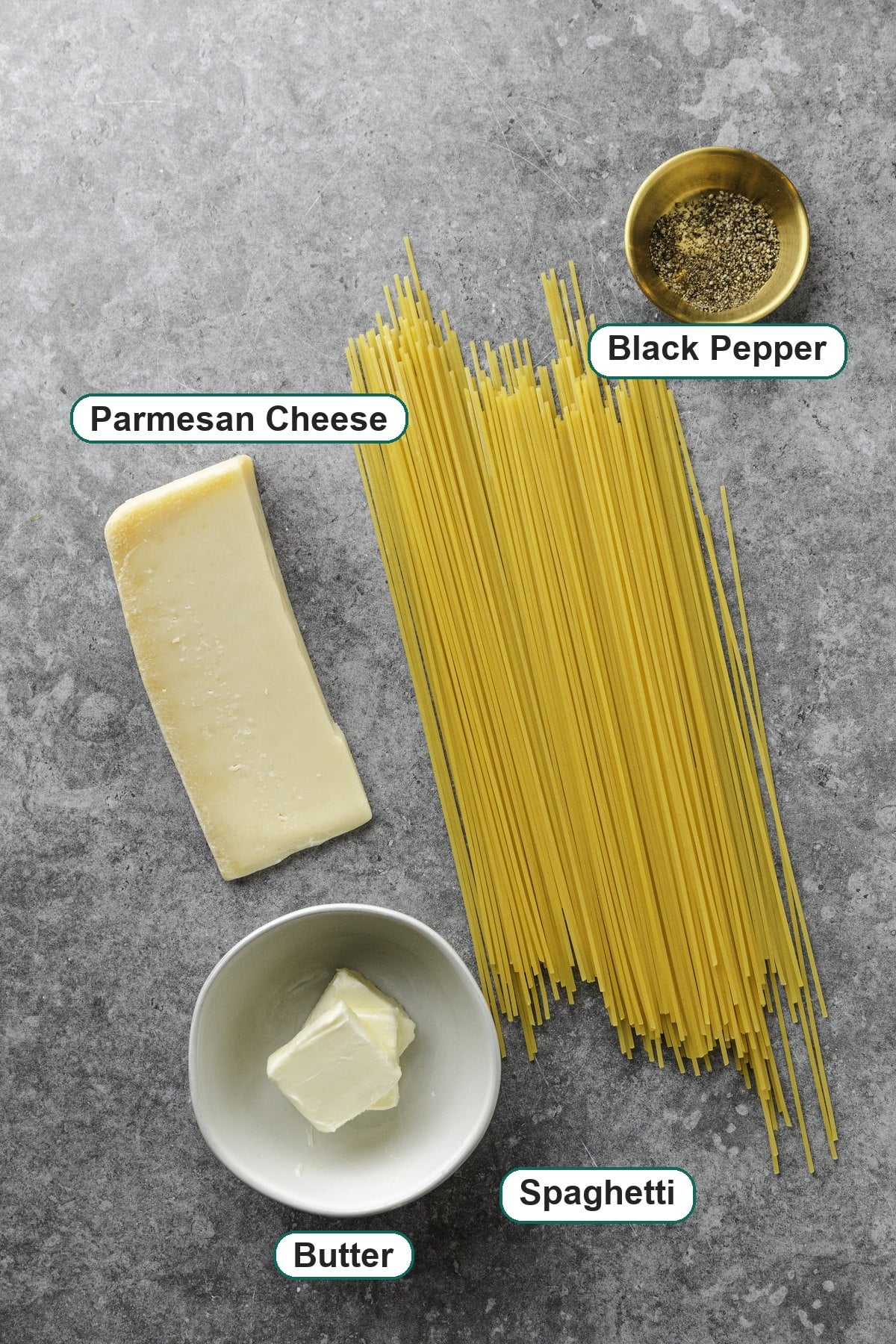
This is a short list, so it pays to pick good ones.
- Spaghetti: Classic and perfect for twirling. Linguine or fettuccine work too. Cook it just to al dente, since it keeps softening in the sauce.
- Butter: Unsalted butter lets you control the salt, since Parmesan already brings plenty. Leftover butter is the perfect excuse to make our easy compound butter.
- Parmesan Cheese: Buy a wedge and grate it fresh on a fine grater. Pre shredded cheese has anti caking powder that keeps it from melting smoothly.
- Black Pepper: Freshly ground is a must. It is half the name of the dish, so give your pepper grinder a workout.
- Pasta Water: Not on the shopping list, but it is the secret fifth ingredient. Save at least a cup before you drain the pasta.
See recipe card for exact quantities.
Variations and Substitutions
Once you have the classic down, it is easy to make it your own.
- Traditional Roman style: Use finely grated Pecorino Romano in place of the Parmesan and skip the butter, using a little more pasta water to make the sauce.
- Half and half cheese: Use half Parmesan and half Pecorino for a sharper, saltier flavor with the same creamy texture.
- Lemony cacio e pepe: Finish with a little lemon zest and a squeeze of lemon juice to brighten all that richness.
- Add a protein: Top it with sliced grilled chicken, seared shrimp, or a few of our homemade Italian meatballs for a heartier meal.
- Truffle cacio e pepe: A tiny drizzle of truffle oil right before serving makes it feel extra special. A little goes a long way.
- Different pasta: Try the same sauce on homemade potato gnocchi or bucatini for a fun twist on the classic.
How to Make Cacio e Pepe
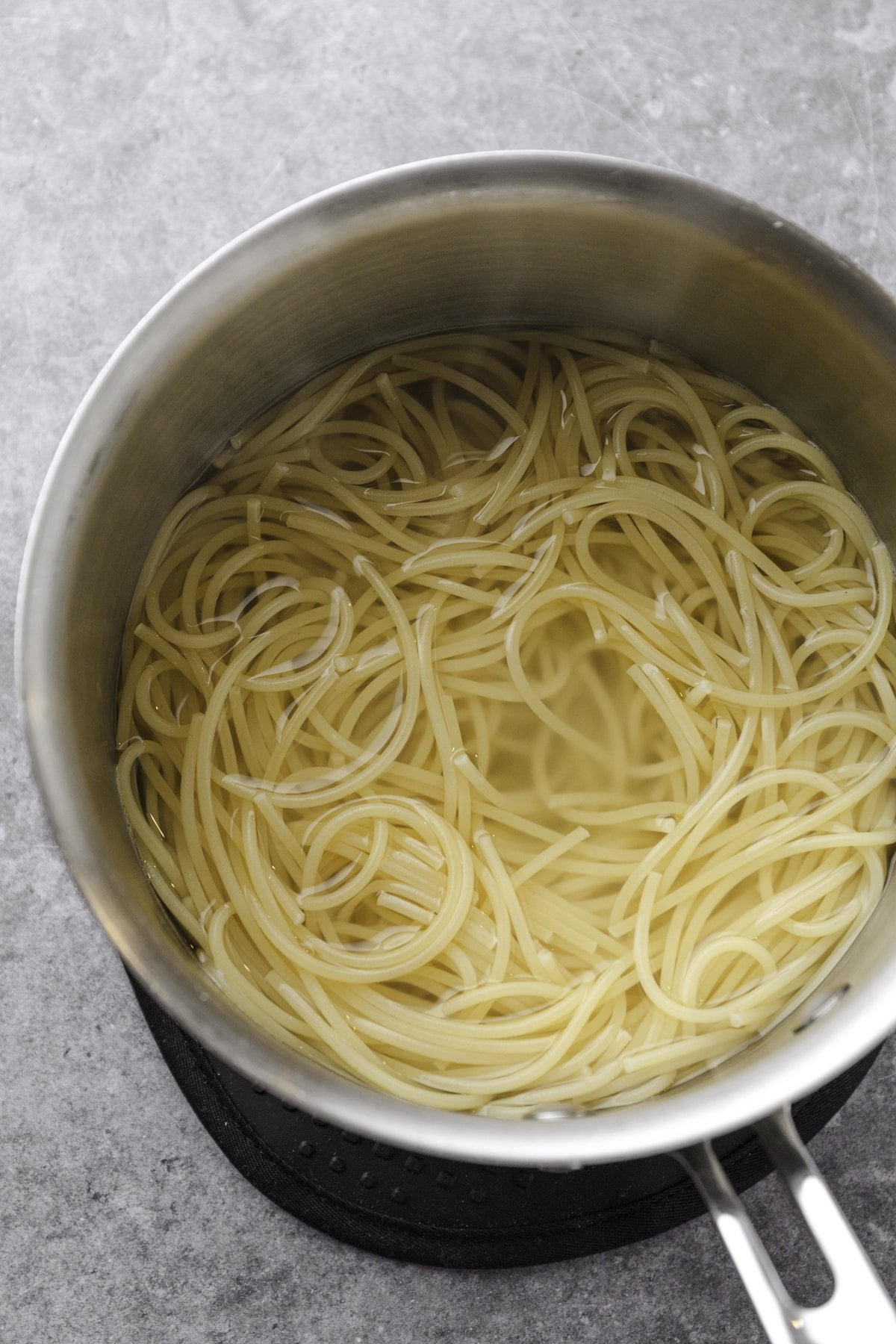
- Cook the spaghetti in a big pot of boiling water until al dente. Before you drain it, scoop out 1 to 2 cups of the starchy pasta water and set it aside.
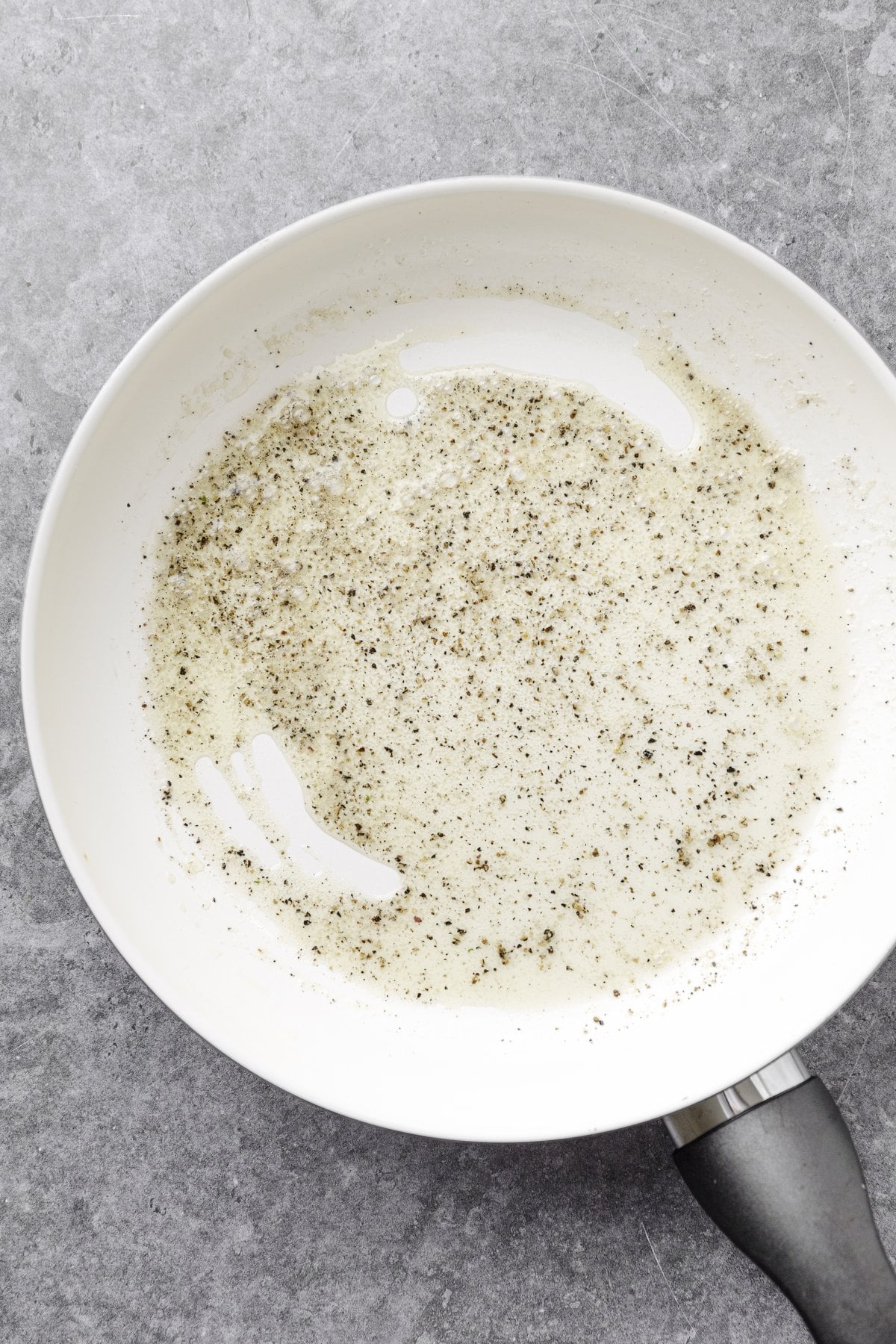
- Melt 2 tablespoons of butter in a large skillet over medium heat. Add the black pepper and let it sizzle for about 1 minute, until it smells toasty.
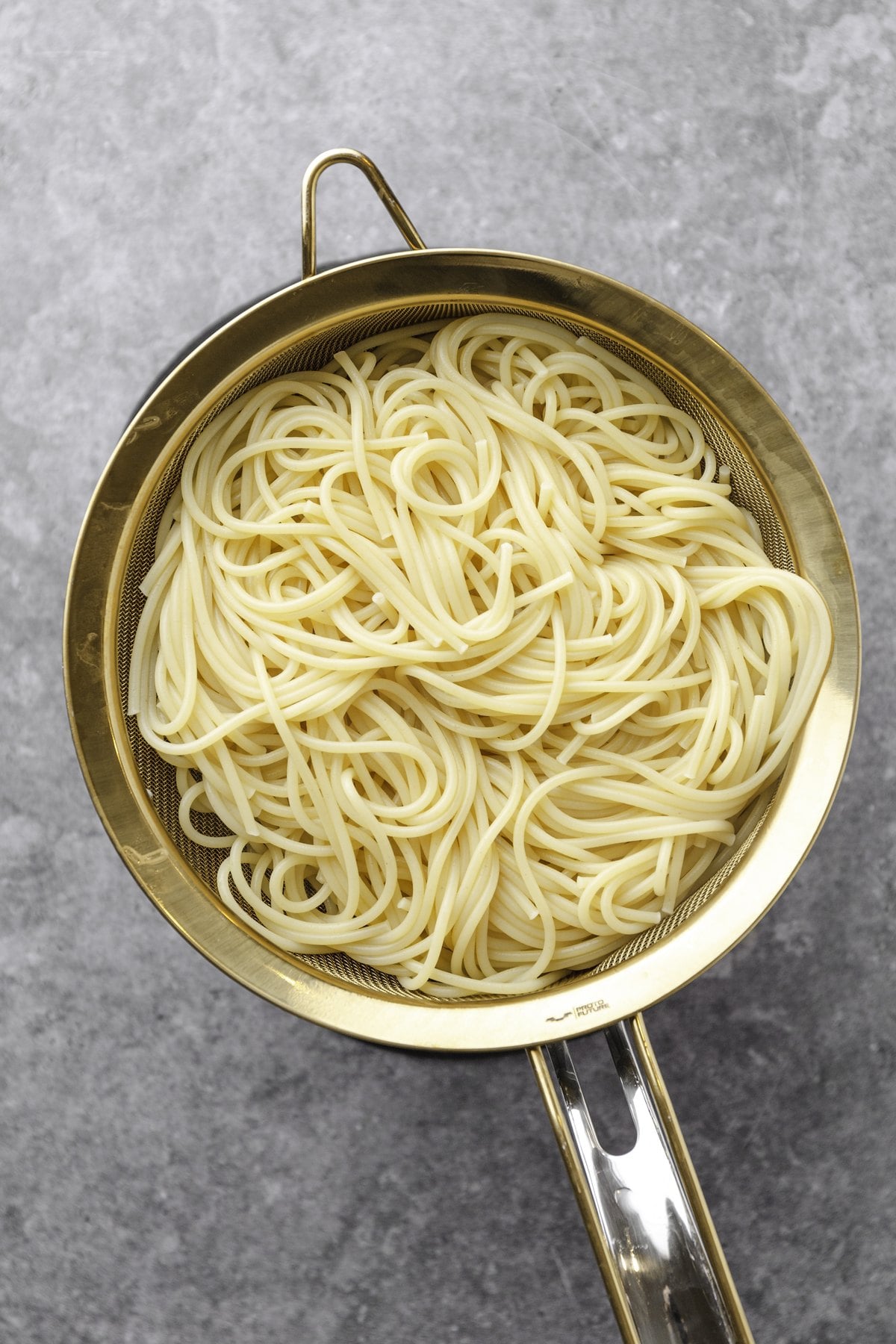
- Pour in 1/2 cup of the pasta water, then add the drained spaghetti and the last tablespoon of butter. Turn the heat down to low.
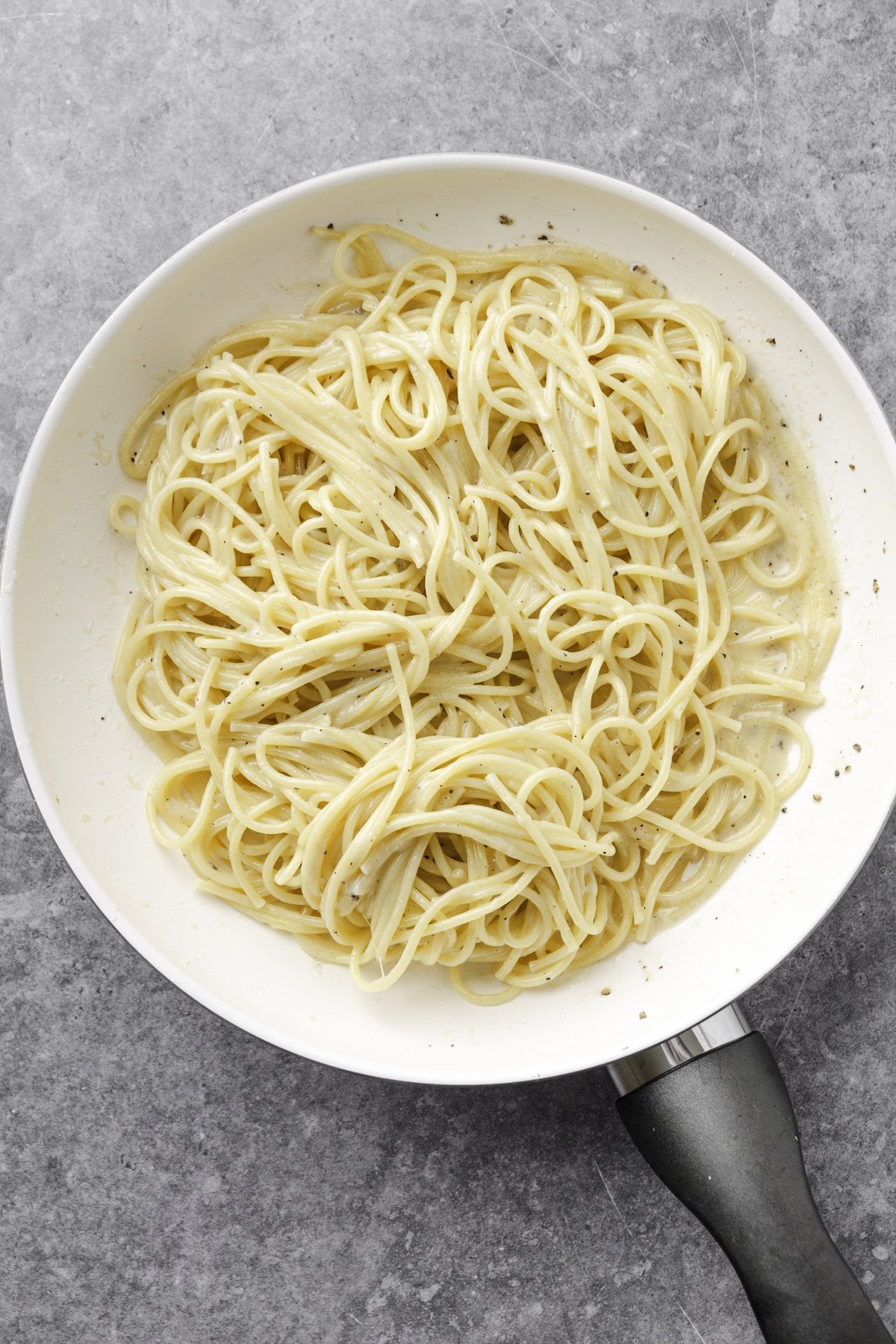
- Sprinkle in the Parmesan and toss with tongs until the cheese melts into a silky sauce that coats every strand, adding splashes of pasta water as needed. Serve right away.
Recipe Tips & Tricks
- Save extra pasta water. Scoop out more than you think you need. You can always leave some in the mug, but you cannot get it back once it goes down the drain.
- Grate the cheese finely. Use the small holes of a box grater or a microplane. Fluffy shreds melt smoothly, chunky ones clump.
- Turn the heat down before the cheese. Low heat is the difference between a creamy sauce and a clumpy one.
- Toss like you mean it. Keep the pasta moving with tongs so the starch, butter, and cheese turn into a glossy sauce.
- Undercook the pasta slightly. Pull it a minute before the package time so it finishes perfectly in the skillet.
- Serve it hot. Cacio e pepe is at its creamiest right away, so have the plates ready before the cheese goes in.
- Make it a pasta night. Set out a basket of our buttery salt bread rolls for mopping up every last bit of sauce.
Serving Ideas and Suggestions
Cacio e pepe is rich, so pair it with something fresh and crunchy, like a crisp Caesar salad with our homemade Caesar dressing or a bright caprese panzanella. Roasted veggies like our Parmesan roasted yellow squash are an easy side too.
For a bigger Italian night, serve a small bowl as a first course before our chicken cacciatore, steak pizzaiola, or a light cod piccata.
Start the meal with a cozy bowl of our Italian wedding soup, and keep a jar of our oven roasted tomato sauce around for the next pasta night.
Pasta lovers, keep going: our chicken broccoli Alfredo, creamy pesto pasta made with our basil pesto, and one pot Tuscan chicken pasta are all family favorites.
Cacio e Pepe FAQs
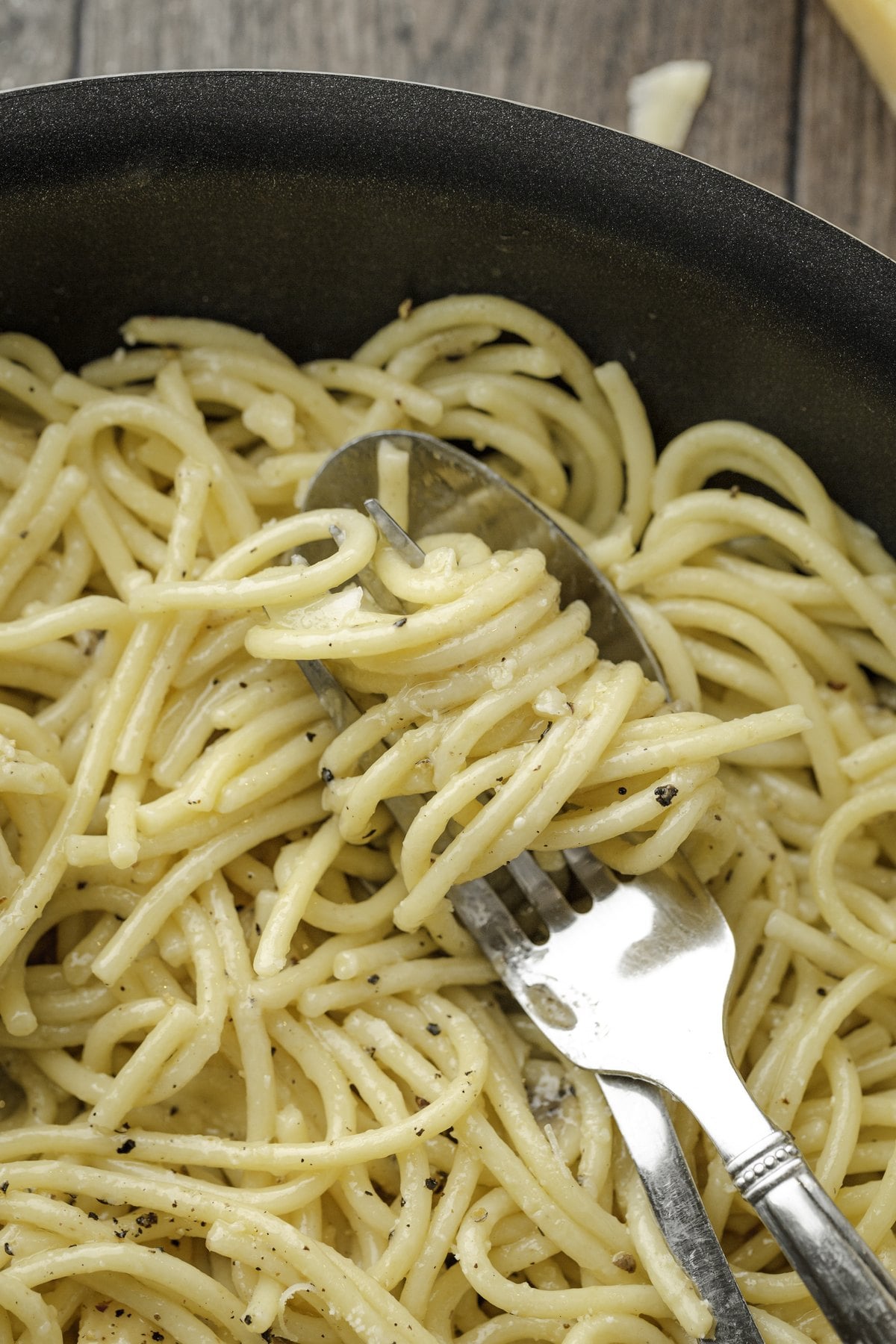
Cacio e pepe means cheese and pepper in Italian. It is a classic Roman pasta made with grated cheese, black pepper, and starchy pasta water that come together into a creamy sauce. This version adds a little butter for an extra rich, foolproof sauce.
Cacio e pepe gets clumpy when the heat is too high or the cheese is not grated finely enough. Lower the heat before adding the cheese, use finely grated Parmesan instead of pre shredded, and keep tossing while you add splashes of pasta water until the sauce turns smooth.
Yes, Pecorino Romano is actually the traditional cheese for cacio e pepe. It is saltier and tangier than Parmesan, so taste before adding any salt. You can also use half Pecorino and half Parmesan for a balance of sharp and nutty flavor.
Butter is not traditional in cacio e pepe, but it makes the sauce richer and much more forgiving for home cooks. For a classic version, skip the butter and use a little more pasta water and cheese to build the sauce.
Long pasta like spaghetti, tonnarelli, bucatini, linguine, or fettuccine is best for cacio e pepe because the silky sauce clings to every strand. Bronze cut pasta releases more starch, which helps the sauce turn creamy.
Reheat leftover cacio e pepe in a skillet over low heat with a splash of water, tossing until the sauce loosens and turns creamy again. Leftovers keep in an airtight container in the fridge for up to 2 days, though it is always best served fresh.


Want another simple pantry pasta for busy nights? Our spaghetti aglio e olio comes together with garlic, olive oil, and just a few minutes on the stove.
💛 From our kitchen to yours, Jason, Maddie & Lizzie.
We’re a dad and his girls making real food with real butter, real sugar, and a lot of laughing. Pull up a chair, you’re family here.

Easy Cacio e Pepe (Butter, Parmesan and Black Pepper Pasta)
Ingredients
- 6 oz spaghetti or linguine or fettuccine
- 3 tablespoons butter unsalted, divided
- 1 cup Parmesan cheese freshly and finely grated
- 1 teaspoon black pepper freshly ground
Instructions
- Cook the spaghetti according to the package directions until al dente. Before draining, scoop out and save 1 to 2 cups of the starchy pasta cooking water.6 oz spaghetti
- In a large skillet over medium heat, melt 2 tablespoons of the butter. Add the black pepper and cook for about 1 minute, until it smells toasty and fragrant.3 tablespoons butter, 1 teaspoon black pepper
- Pour 1/2 cup of the reserved pasta water into the skillet. Add the drained pasta and the remaining 1 tablespoon of butter. Lower the heat, sprinkle in the Parmesan, and toss until the cheese melts into a silky, smooth sauce that coats every strand. Splash in more pasta water as needed.1 cup Parmesan cheese
- Plate the pasta while it is hot and creamy, add an extra crack of black pepper on top if you like, and serve immediately.
Notes
Save more pasta water than you think you need. The starch in it is what turns butter and cheese into a creamy sauce, and it is great for reheating leftovers too.
Keep the heat low once the cheese goes in. Too much heat makes the cheese seize into clumps instead of melting.
For a more traditional version, use Pecorino Romano in place of the Parmesan and skip the butter, using a little more pasta water instead.
Cacio e pepe is best served right away. Leftovers keep in the fridge for up to 2 days; reheat in a skillet with a splash of water.
Nutrition
Love This Recipe?
Follow @ThisSillyGirlsKitchen on Instagram and @ThisSillyGirlsKitchen on Pinterest for more!








4 ingredients thats it. Simple and so tasty. Enjoy.