This post may contain affiliate links.
Pizza Dough made from scratch is the secret to better than takeout pizza right in your own kitchen, with a chewy, crispy, golden crust that puffs up beautifully in the oven. We have a homemade pizza night almost every Friday, and the girls love stretching their own dough and piling on the toppings. Pair it with our easy homemade pizza sauce and you are set.
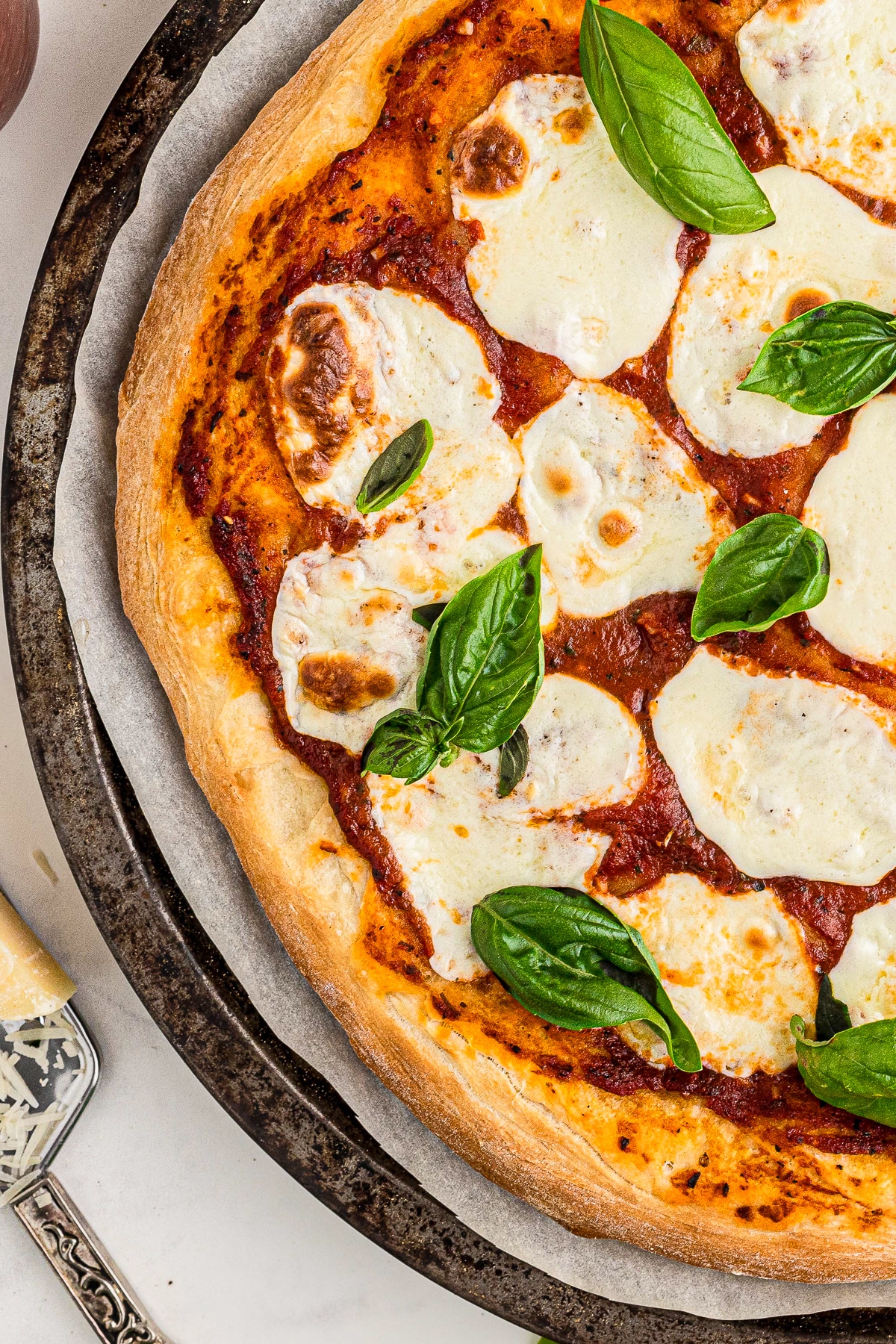
With just six pantry ingredients and a little rise time, this easy pizza dough gives you a bakery quality Neapolitan style crust every single time.
Pizza Dough Quick Look
- 🕒 Prep Time: 10 minutes
- 🌡️ Cook Time: 0 minutes
- ⏳ Total Time: 1 hour 10 minutes
- 🍽️ Serving: 2 pizzas
- ⚡ Calories: 1053kcal
- 🌶️ Flavor Profile: Chewy, crisp, and golden with a light, airy crust
- ✋ Difficulty: Easy, just mix and let it rise, about as simple as our homemade pizza sauce
Quick Answer
To make homemade pizza dough, stir active dry yeast and sugar into warm water between 105 and 115 degrees Fahrenheit and let it bloom until frothy. Add olive oil, bread flour, and salt, then knead with a dough hook until smooth and elastic. Let the dough rise in an oiled bowl for about an hour until doubled, then punch it down, stretch it into shape, top, and bake.
Jump to:
Why This Recipe Works
Click to see the technique science
- Bread flour gives the chewiest crust. The higher protein in bread flour builds more gluten, which is what creates that satisfying chewy, stretchy pizza crust.
- Blooming the yeast guarantees a good rise. Letting the yeast get frothy in warm water first proves it is alive, so your dough is sure to rise tall and airy.
- A little sugar feeds the yeast. Sugar gives the yeast something to eat, which helps the dough rise faster and adds a touch of golden color to the crust.
- Olive oil keeps it tender. A couple tablespoons of olive oil makes the dough easier to stretch and gives the finished crust a soft, rich bite.
- The right water temperature matters. Water between 105 and 115 degrees Fahrenheit is warm enough to activate the yeast without killing it, which is the key to a good rise.
- It freezes for pizza night anytime. Make a double batch and freeze the extra dough, so a homemade pizza is always just a thaw away.
Why You’ll Love This Recipe
- It bakes up chewy on the inside and crispy on the edges, exactly like your favorite pizzeria crust.
- It uses just six simple ingredients and pairs perfectly with our homemade pizza sauce and any toppings you love.
- It is a fun, hands-on recipe the whole family can help with, and the dough freezes beautifully for an easy pizza night later.
- It is the kind of no fuss win that pairs beautifully with our edible snickerdoodle cookie dough on a busy week.
- It earns a spot in the rotation right next to our stromboli recipe.
- It is the kind of no fuss win that pairs beautifully with our meatball pizza on a busy week.
Key Ingredients
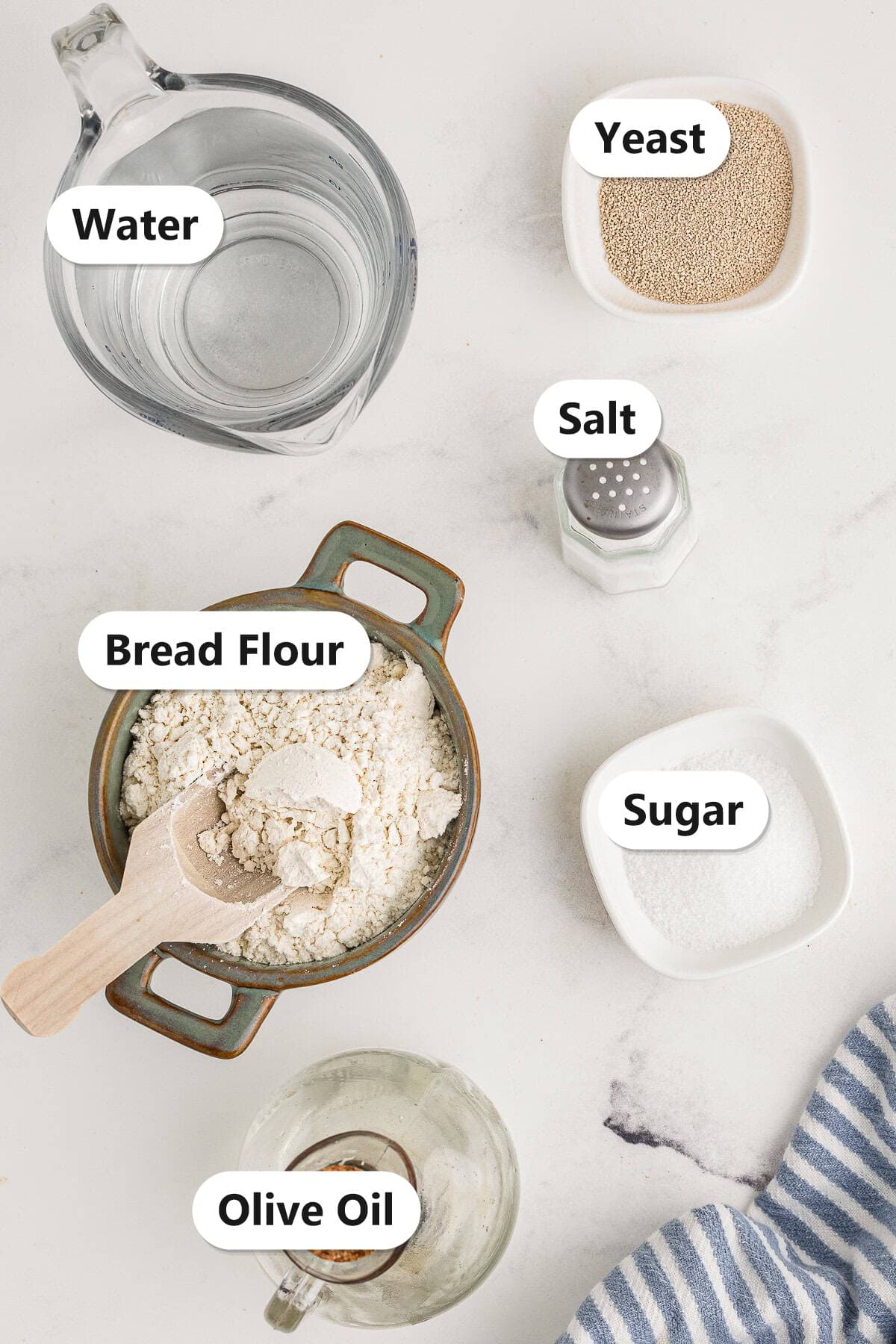
Just six everyday ingredients make the best homemade pizza dough. Here is what each one does.
- Bread flour: The high protein content builds the gluten that gives pizza dough its signature chewy, stretchy texture. All purpose works in a pinch.
- Active dry yeast: This is what makes the dough rise and gives the crust its light, airy structure.
- Warm water: Water between 105 and 115 degrees Fahrenheit activates the yeast without killing it.
- Sugar: A little sugar feeds the yeast for a better rise and helps the crust brown.
- Olive oil and salt: Oil makes the dough tender and easy to stretch, while salt seasons it and strengthens the gluten.
See recipe card for exact quantities.
Variations and Substitutions
This pizza dough is a versatile base, so have fun with it:
- Make it whole wheat: Swap up to half of the bread flour for whole wheat flour for a heartier, nuttier crust.
- Add flavor: Work a little garlic powder, dried oregano, or grated parmesan into the dough for a seasoned crust.
- Use it for more than pizza: Shape it into breadsticks, calzones, or a base for our buffalo chicken pizza.
- Make it ahead: Let the dough rise slowly in the fridge overnight for even more flavor, then bring it to room temperature before shaping.
- For another spin on this idea, try our cookie dough truffles next time.
- In the mood for something different? Our homemade crescent rolls scratches a similar itch.
- For another spin on this idea, try our bbq chicken english muffin pizza next time.
How to Make Pizza Dough
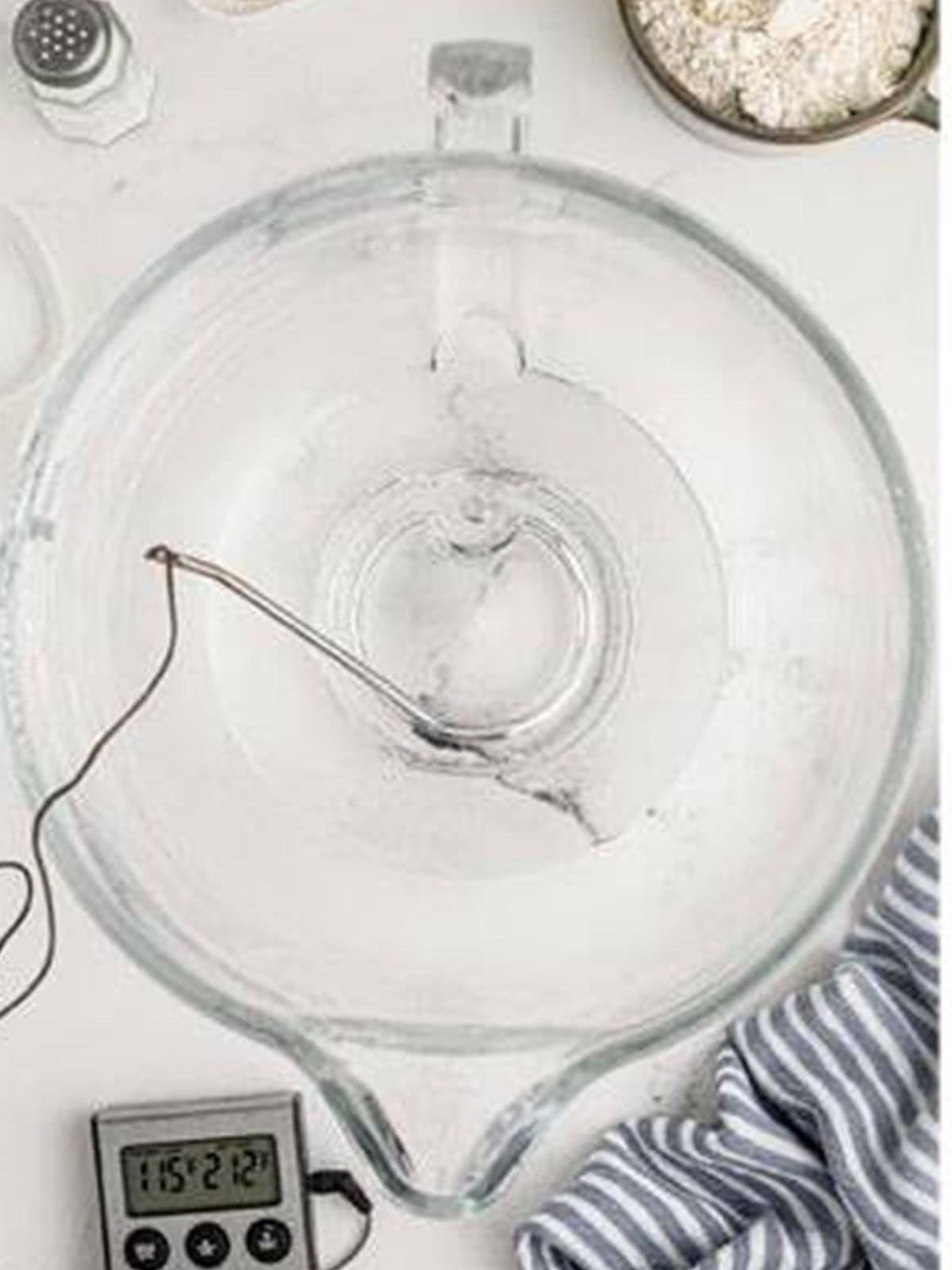
- Add the water to the bowl of a stand mixer and make sure it is between 105 and 115 degrees Fahrenheit, warm but not hot.
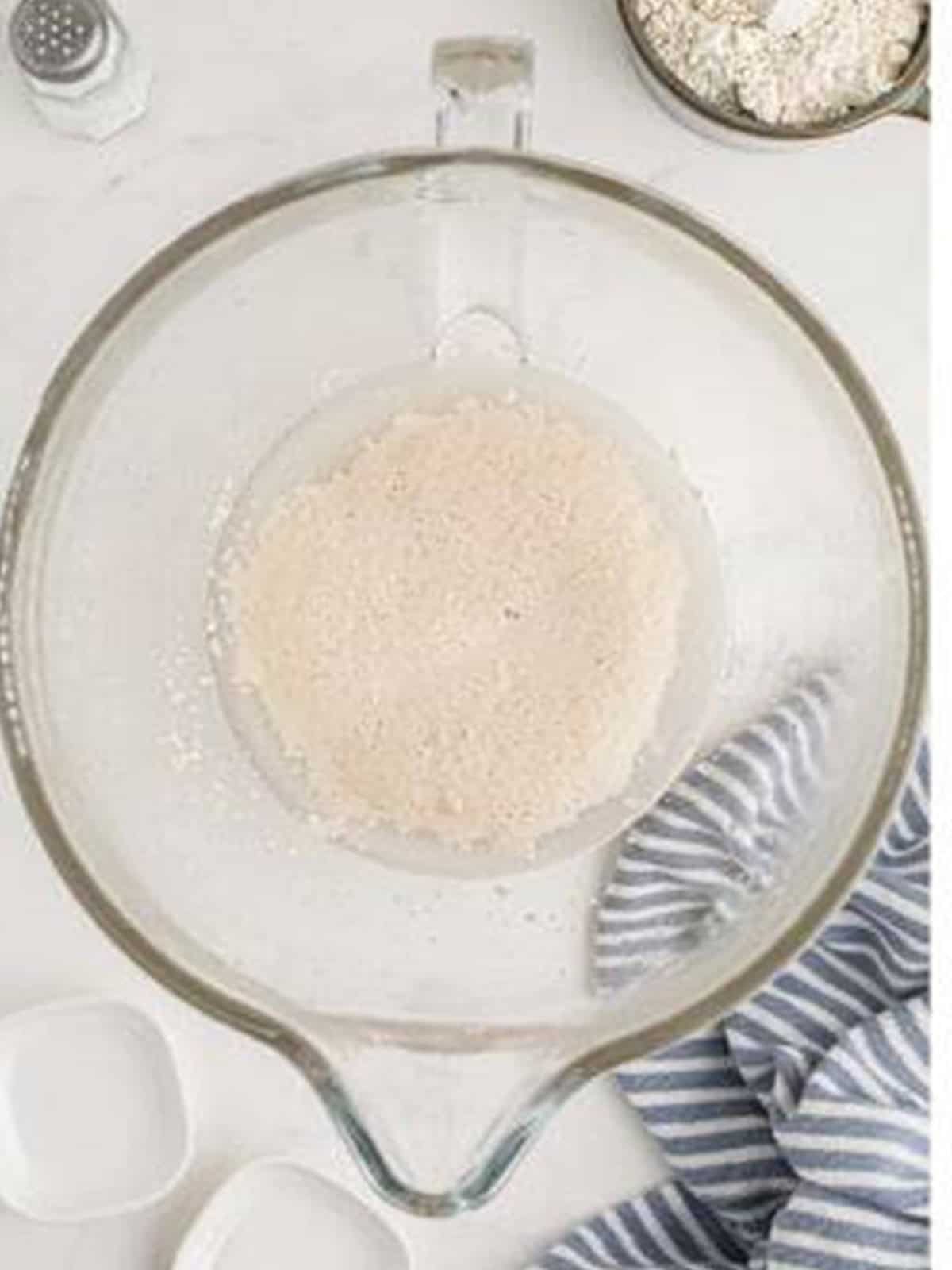
- Stir in the yeast and sugar, then cover and let it bloom for about 5 minutes until frothy. If it does not foam, the yeast is dead and you will need to start over with fresh yeast.
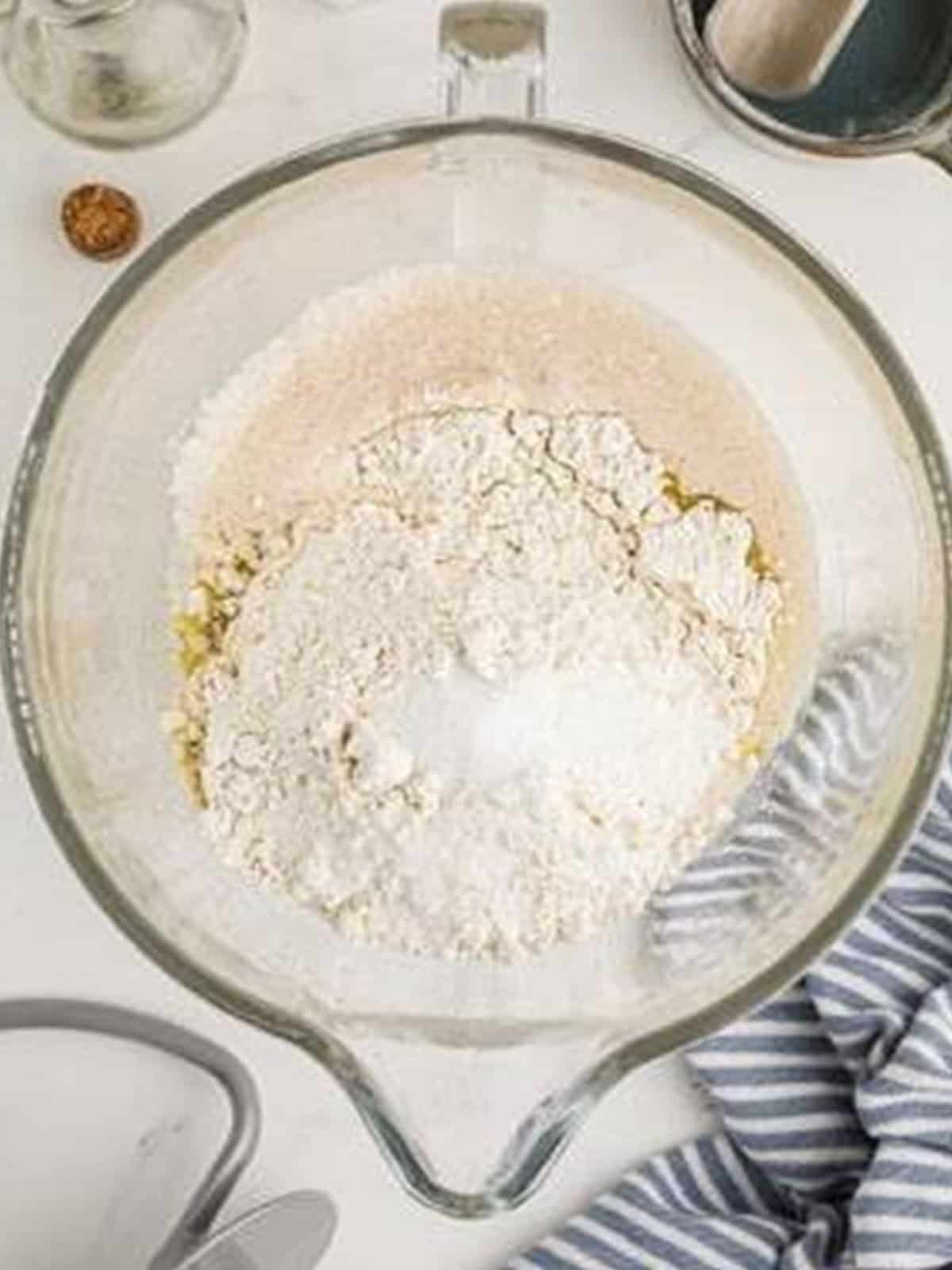
- Add the olive oil, bread flour, and salt to the bowl with the bloomed yeast.
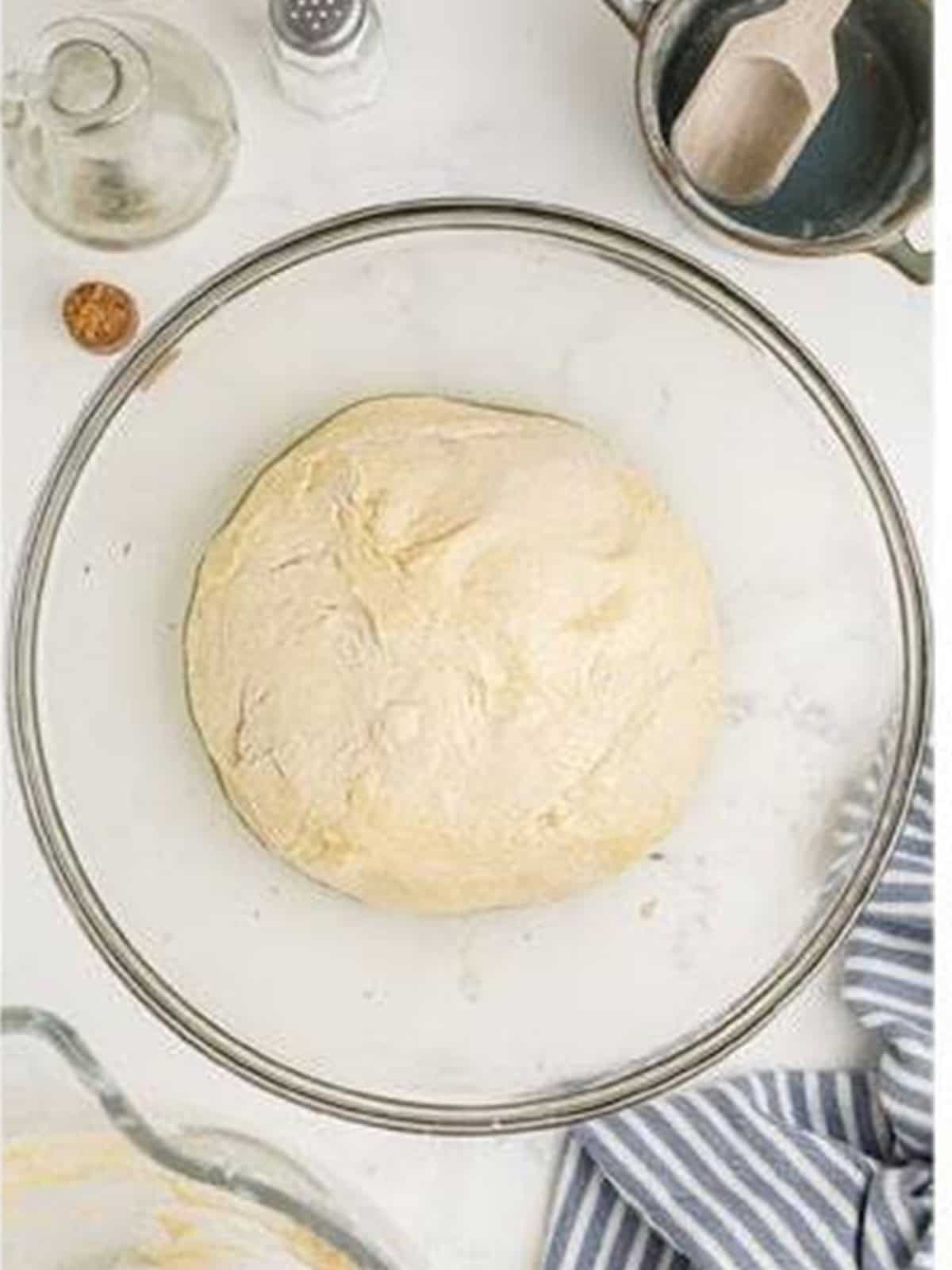
- Using the dough hook attachment, mix on low speed until the dough comes together, then knead for 5 to 7 minutes until it is smooth and elastic.
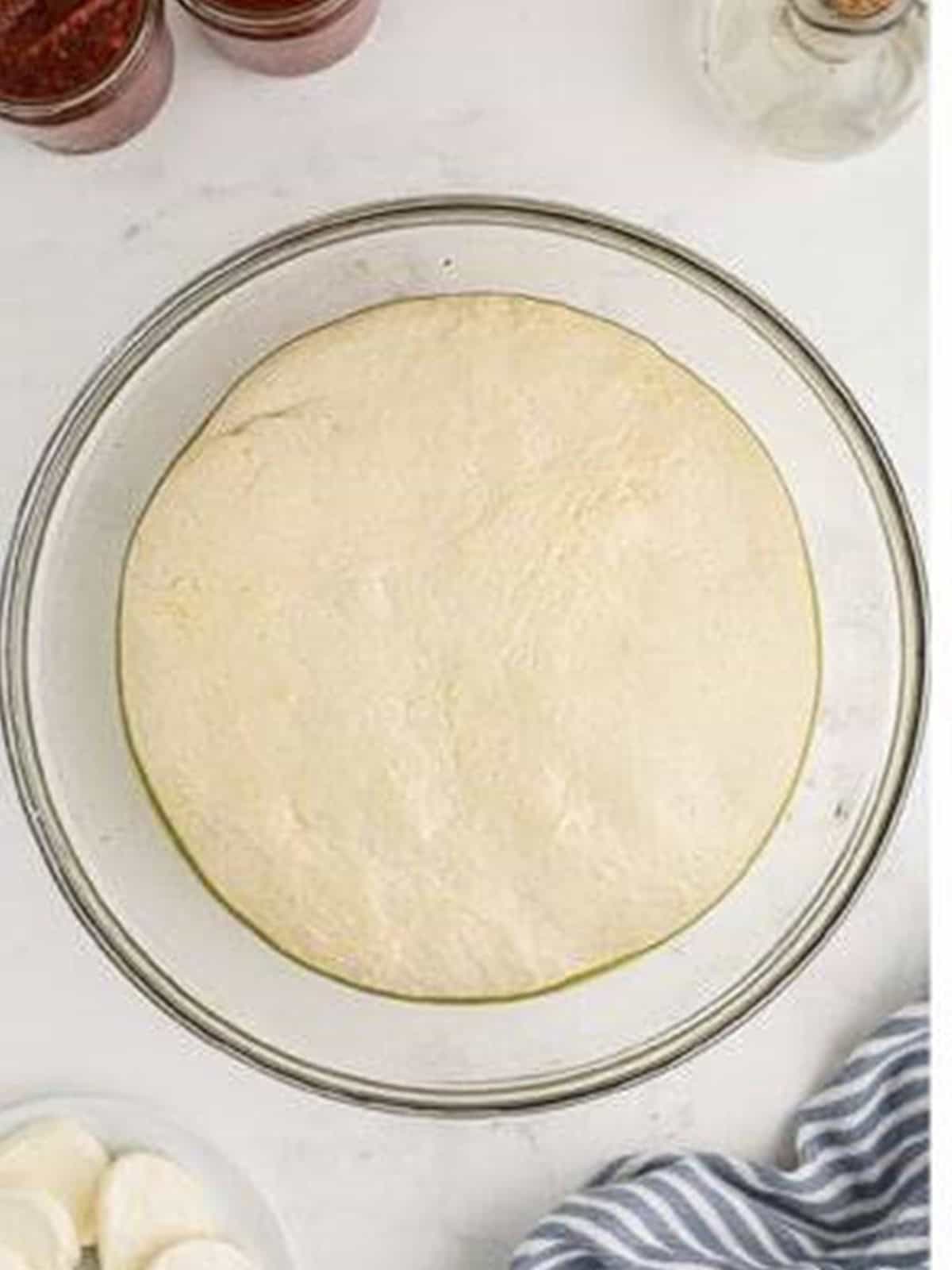
- Place the dough in a lightly oiled bowl, cover, and let it rise in a warm spot for about 1 hour, until doubled in size.
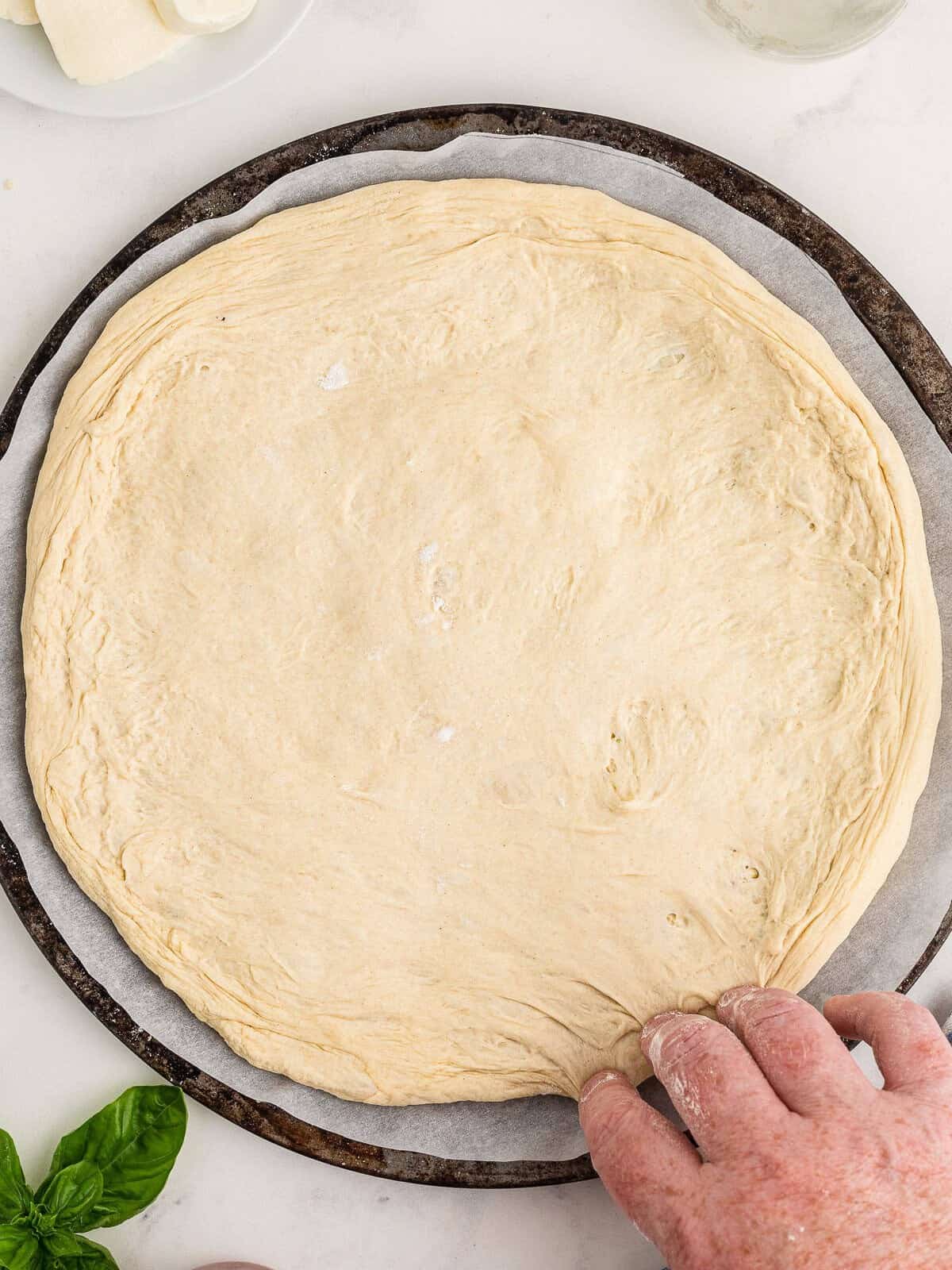
- Punch down the dough and turn it onto a floured surface. Stretch or roll it into your desired pizza shape, brush with olive oil, then add sauce and toppings and bake at 500 degrees Fahrenheit until golden.
Recipe Tips & Tricks
- Check your water temperature, use a thermometer to keep it between 105 and 115 degrees Fahrenheit so the yeast blooms but does not die.
- Wait for the foam, a frothy yeast mixture after 5 minutes tells you the yeast is alive and your dough will rise.
- Use bread flour if you can, it gives the chewiest, most authentic pizza crust, though all purpose will work.
- Let it rise fully, the dough should double in size, which gives the crust its light, airy texture.
- Stretch, do not roll, for a bubbly crust, gently stretching the dough by hand keeps the air pockets that make the edges puffy.
- Bake it hot, a very hot oven, 500 degrees Fahrenheit or higher, gives you that crisp, golden pizzeria crust at home.
- Double up for gatherings. Serve it alongside our chicago style deep dish pizza and watch both disappear.
- Make it a full spread. Our basil pesto sauce rounds out the table.
Serving Ideas and Suggestions
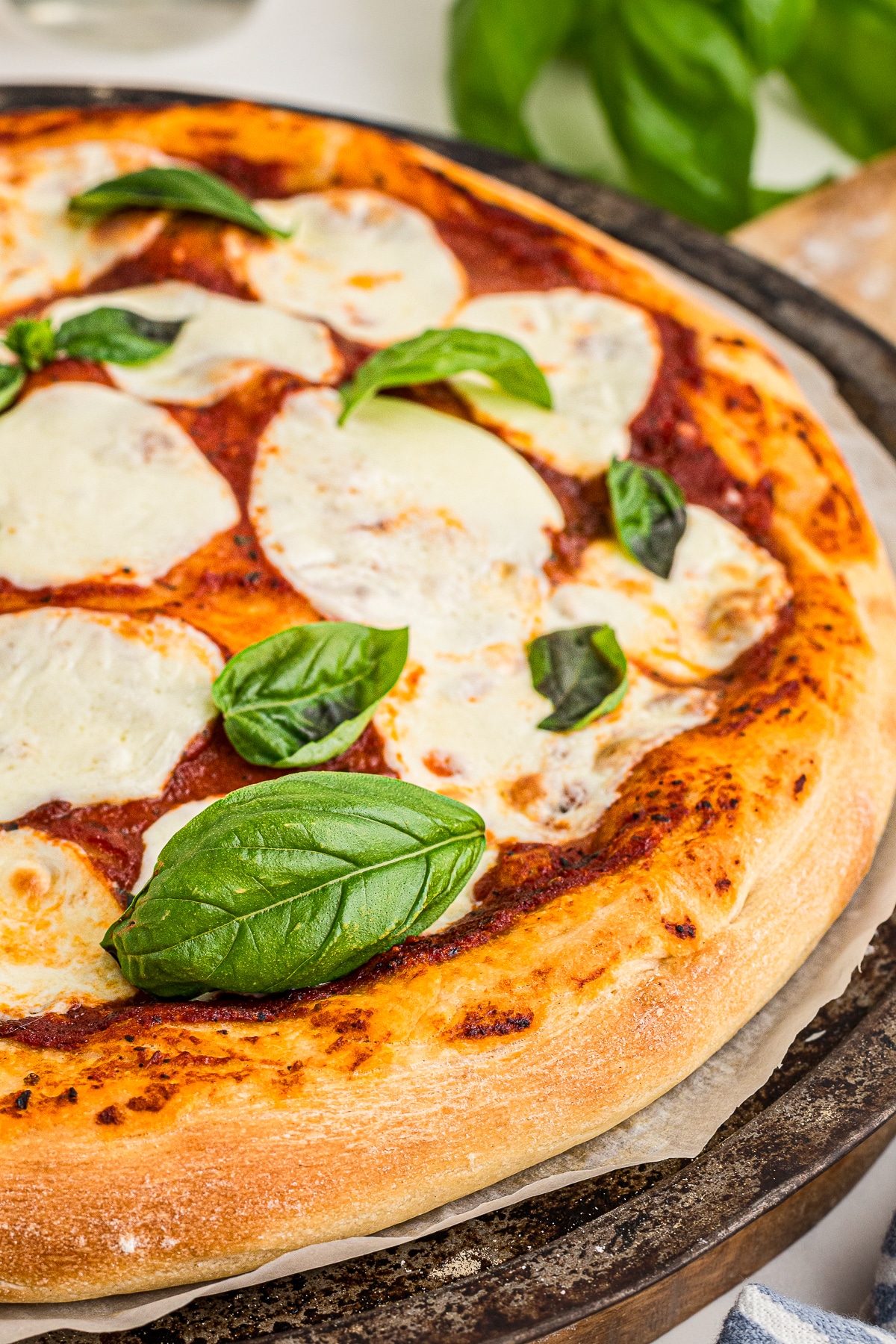
This homemade pizza dough is the perfect base for a classic margherita pizza with our homemade pizza sauce and fresh mozzarella. Pile on pepperoni, veggies, or whatever your family loves for the ultimate pizza night.
Use the dough to switch things up with our buffalo chicken pizza or a hearty deep dish pizza. It also makes wonderful breadsticks, calzones, and stromboli for dipping in warm marinara sauce.
Serve your homemade pizza hot from the oven with a crisp green salad and a sprinkle of parmesan and red pepper flakes. Leftover slices reheat beautifully, so make extra if you can.
Pizza Dough FAQs
Yes, pizza dough is great to make ahead. After the first rise, punch it down and store it in an airtight container in the fridge for up to three days. A slow cold rise actually develops more flavor. You can also freeze the dough for up to three months and thaw it overnight in the fridge before using.
Bread flour is the best choice for pizza dough because its higher protein content creates more gluten, giving you a chewy, stretchy crust. Italian 00 flour is the traditional choice for Neapolitan pizza and makes an even silkier dough. All purpose flour will work too, though the crust will be a little less chewy.
If your pizza dough did not rise, the most common reason is the yeast. Water that is too hot can kill it, and water that is too cold will not activate it, so aim for 105 to 115 degrees Fahrenheit. Old, expired yeast will also fail to bloom. Always wait for the yeast to get frothy before adding the flour.
Let the dough rest and come to room temperature first, as cold dough is tight and tears easily. Gently stretch it from the center outward with your hands, or drape it over your knuckles and let gravity help. If it springs back and resists, let it rest another 10 minutes, then try again.
Absolutely. You can make pizza dough completely by hand. Stir the ingredients together with a wooden spoon until a shaggy dough forms, then turn it onto a floured surface and knead by hand for about 10 minutes until smooth and elastic. It takes a little more effort but works just as well.
Pizza dough usually needs about 1 hour to rise at room temperature, until it has doubled in size. The exact time depends on how warm your kitchen is, so a warm spot will speed it up. For the best flavor, you can also let it rise slowly in the refrigerator overnight.




Homemade Pizza Dough
Ingredients
- 1 ½ cups water 105-115°F
- 2 ¼ teaspoons active dry yeast
- 2 teaspoons granulated sugar
- 2 tablespoons olive oil + extra for brushing
- 4 cups bread flour
- 1 ½ teaspoons salt
Instructions
- Add the heated water to the bowl of your stand mixer and make sure it is between 105°F and 115°F.1 ½ cups water
- Add the yeast and sugar, give a quick mix then cover and allow to bloom for 5 minutes. It should be nice and frothy after 5 minutes. (If it is not then the yeast is not alive and you’ll need to ditch it and start again.)2 ¼ teaspoons active dry yeast, 2 teaspoons granulated sugar
- Add the olive oil, flour and salt and using the dough hook attachment mix the dough on low speed until the dough comes together.2 tablespoons olive oil + extra for brushing, 1 ½ teaspoons salt, 4 cups bread flour
- Add the heated water to the bowl of your stand mixer and make sure it is between 105°F and 115°F.
- Add the yeast and sugar, give a quick mix then cover and allow to bloom for 5 minutes. It should be nice and frothy after 5 minutes. (If it is not then the yeast is not alive and you’ll need to ditch it and start again.)
- Add the olive oil, flour and salt and using the dough hook attachment mix the dough on low speed until the dough comes together.
- Brush the pizza base with olive oil, then top with pizza sauce and favorite toppings.
- Bake in a preheated oven at 500°F for 10-12 minutes.
Notes
- For best results, measure ingredients by weight.
- Preheat your oven and get it as hot as possible, ideally 500°F, to mimic a pizza oven.
- If you have a pizza stone or baking stone, use it for a crispy crust with this homemade pizza dough recipe.
- Don’t overload the pizza with too many toppings- it can make the crust soggy.
- Allow the dough to rest after kneading. This makes it easier to stretch.
- Use your hands instead of a rolling pin to stretch the dough for an authentic texture.
Nutrition
Love This Recipe?
Follow @ThisSillyGirlsKitchen on Instagram and @ThisSillyGirlsKitchen on Pinterest for more!