This post may contain affiliate links.
This Chilean Sea Bass Recipe is the buttery, restaurant worthy main that makes a weeknight feel fancy, with a sweet and savory Asian glaze that caramelizes under the broiler in under 15 minutes. I first made it for a special weekend dinner when I wanted to treat the family without the steakhouse price tag, and it vanished even faster than our asian marinated grilled shrimp skewers. One bite of that glossy, flaky fish and you will feel like a kitchen hero.

With just seven simple ingredients and one quick broil, you get tender, flaky Chilean sea bass coated in a glaze that tastes like your favorite Asian restaurant.
Chilean Sea Bass Recipe Quick Look
- 🕐 Prep Time: 8 minutes
- 🍴 Cook Time: 9 minutes
- ⏳ Total Time: 17 minutes
- 🍽 Serving: 4 servings
- ⚡ Calories: 304kcal
- 🌶 Flavor Profile: Sweet, savory, buttery Asian glaze
- ✋ Difficulty: Easy, ready even faster than our cod piccata
Quick Answer
To make this Chilean Sea Bass Recipe, pat the filets dry and place them on a sheet tray. Whisk together hoisin, soy sauce, honey, brown sugar, garlic powder, and rice vinegar, then brush the glaze all over the fish. Broil about 6 inches under high heat for 7 to 9 minutes until caramelized and the internal temperature reaches 140 to 145 degrees F.
Jump to:
- Chilean Sea Bass Recipe Quick Look
- Quick Answer
- Why This Recipe Works
- Why You’ll Love This Recipe
- Key Ingredients
- Variations and Substitutions
- How to Make Chilean Sea Bass Recipe
- Recipe Tips & Tricks
- Serving Ideas and Suggestions
- Chilean Sea Bass Recipe FAQs
- Other Recommended Seafood Recipes
- Asian Glazed Chilean Sea Bass Recipe
Why This Recipe Works
Click to see the technique science
- The sweet and savory glaze caramelizes directly on the fish. Hoisin sauce, soy sauce, honey, light brown sugar, garlic powder, and rice wine vinegar are whisked together and brushed all over the Chilean sea bass before it goes under the broiler. The high heat quickly concentrates the glaze and gives the outside a glossy, caramelized finish while the fish cooks underneath. Honey and brown sugar help with browning, while the soy, hoisin, and vinegar keep the glaze balanced between sweet, savory, and tangy.
- The broiler cooks and caramelizes in one step. There is no separate baking stage in this recipe. Position the rack about 6 inches below the broiler, preheat on high, and cook the glazed fillets for 7 to 9 minutes. This gives you strong surface browning without adding another cooking step. Because the glaze contains honey and brown sugar, keep a close eye on the fish so the sugars caramelize without burning.
- Patting the sea bass dry helps the glaze stay concentrated. Before adding the glaze, thoroughly pat the fillets dry with paper towels. Removing surface moisture helps the sauce cling instead of becoming diluted by water released from the fish. A drier surface also gives the sugars in the glaze a better chance to caramelize under the intense heat of the broiler.
- Chilean sea bass stays rich and buttery under high heat. The fish has a naturally rich texture that works especially well with the bold Asian-style glaze. Since this recipe uses the broiler rather than a long baking time, the outside caramelizes quickly while the inside stays tender and flaky. Using a thermometer helps you stop cooking as soon as the fish reaches 140 to 145 degrees F.
- Dropping the oven temperature gives you a backup plan. If the glaze is darkening before the center of the fish reaches temperature, reduce the oven to 350 degrees F and continue cooking until the sea bass reaches 140 to 145 degrees F internally. That lets you protect the caramelized exterior while still cooking thicker fillets all the way through.
Why You’ll Love This Recipe
- It tastes like a fancy restaurant dish but comes together in under 15 minutes.
- Just seven everyday ingredients and one sheet tray to clean.
- A fun way to branch out from our asian marinated grilled shrimp skewers.
Key Ingredients
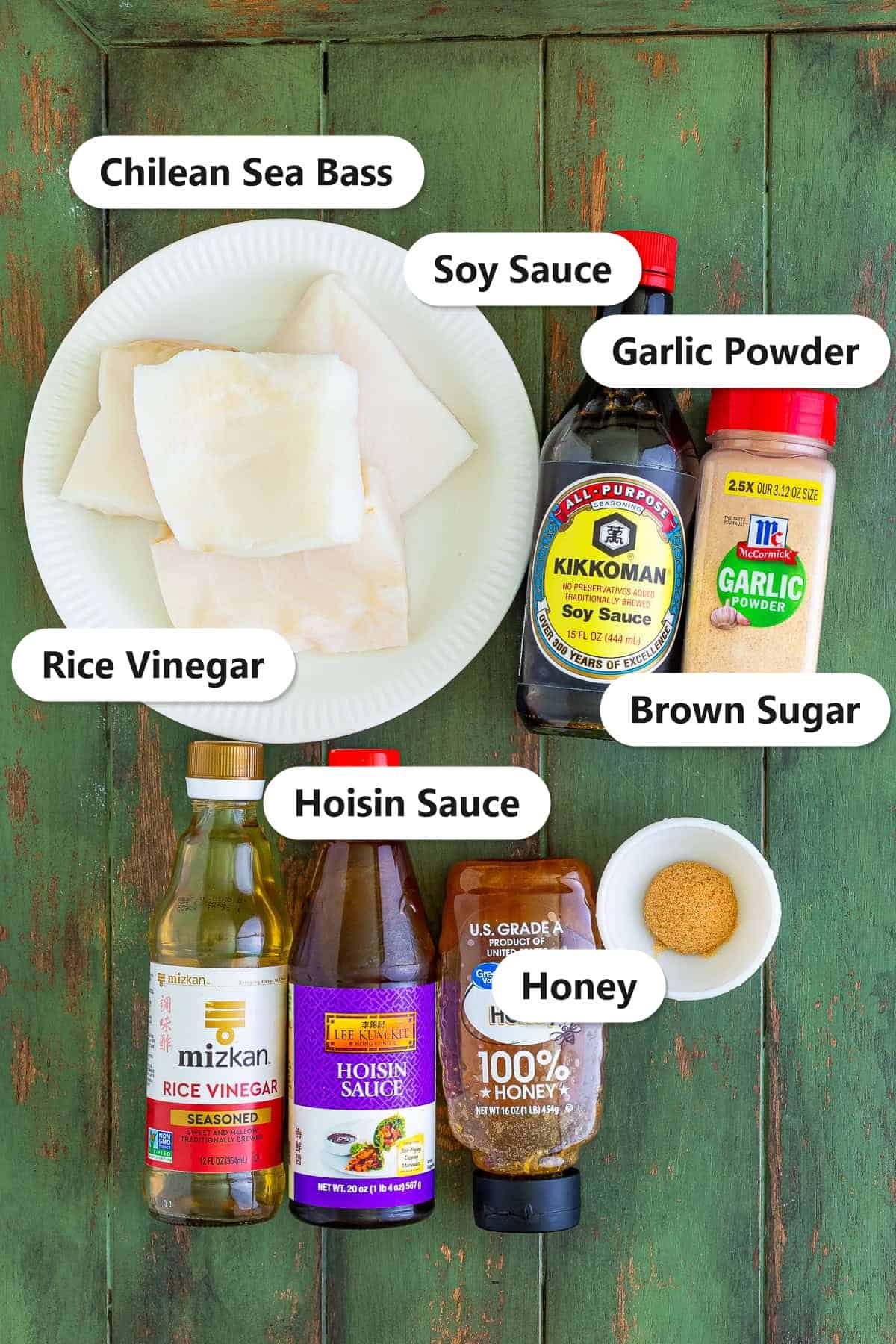
- Chilean sea bass filets: A buttery, high fat white fish that stays moist and flaky.
- Hoisin sauce: The sweet, savory, umami backbone of the glaze.
- Soy sauce: Adds salty depth, just like in our chow mein with ramen noodles.
- Honey and brown sugar: Caramelize into that glossy, restaurant style lacquer.
- Rice vinegar and garlic powder: Brighten and round out the Asian glaze.
See recipe card for exact quantities.
Variations and Substitutions
- Add ginger: Fresh grated ginger deepens the Asian flavor.
- Make it spicy: Stir sriracha or chili garlic sauce into the glaze.
- Swap the fish: Try it with salmon, cod, or halibut.
- No hoisin: Use teriyaki or oyster sauce instead.
- More takeout at home: Try our better than takeout beef and broccoli.
How to Make Chilean Sea Bass Recipe

- Position the top oven rack about 6 inches under the broiler and preheat the broiler on high.
- Pat the Chilean sea bass filets dry with a paper towel and place them on a sheet tray.

- Whisk the hoisin, soy sauce, honey, brown sugar, garlic powder, and rice vinegar together in a small bowl until smooth.

- Brush the glaze all over the filets, coating them well.

- Broil for 7 to 9 minutes until caramelized, watching closely so they do not burn.
- The fish is done at an internal temperature of 140 to 145 degrees F. If it browns too fast, reduce the oven to 350 degrees F and bake to temp.
Recipe Tips & Tricks
- Watch it closely under the broiler, the sugars can burn fast.
- If it browns too quickly, drop the oven to 350 degrees F and bake to temp.
- Pat the fish very dry for the best caramelization.
- Use a thermometer and pull the fish at 140 to 145 degrees F.
- Line the tray with foil for easy cleanup of the sticky glaze.
- Serve right away while the glaze is glossy and the fish is hot.
Serving Ideas and Suggestions
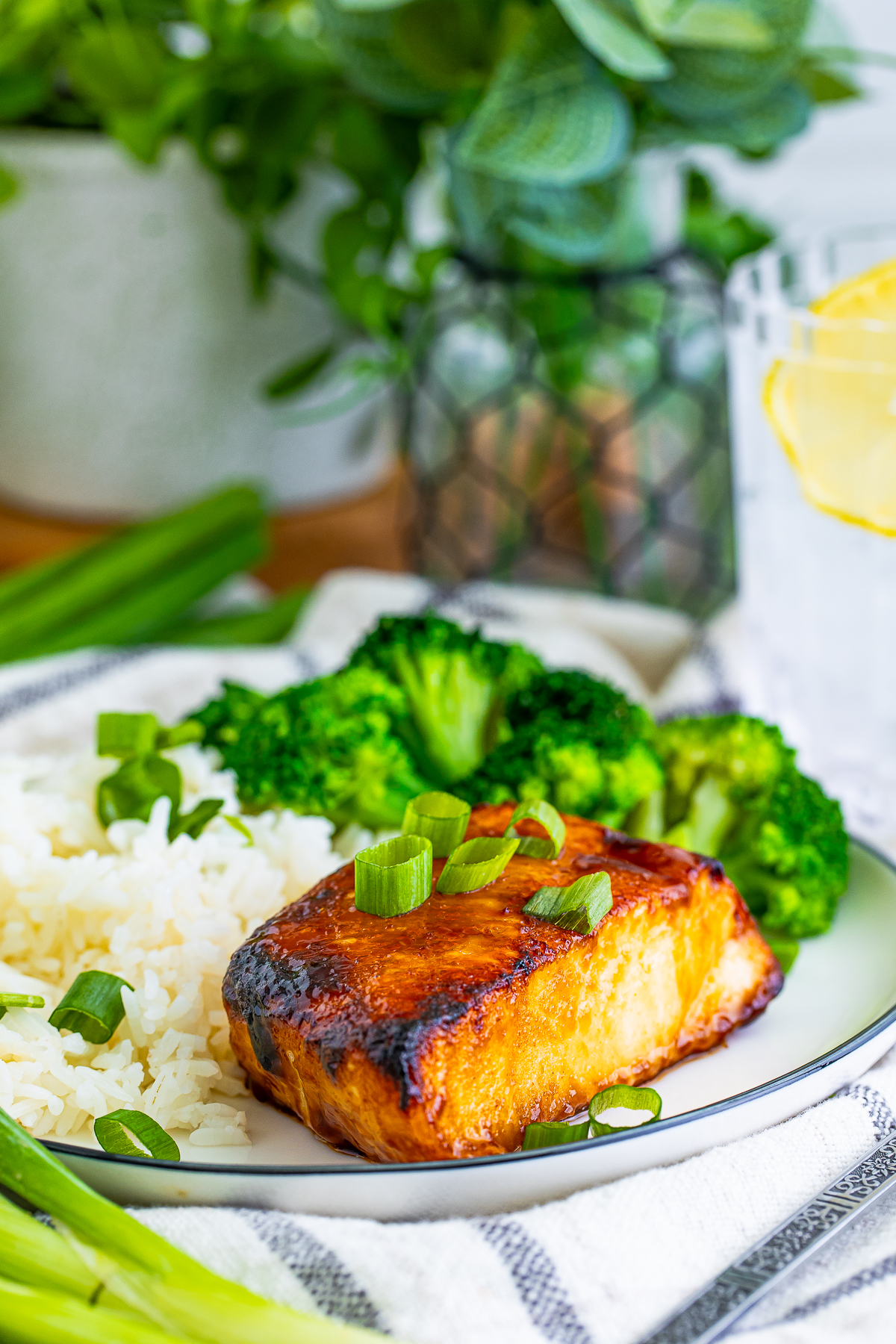
Serve this Chilean Sea Bass Recipe over a bed of fluffy white or jasmine rice so it can soak up all that glossy glaze, with steamed broccoli or green beans on the side. A bowl of wonton soup makes a cozy starter for a restaurant style meal at home.
For a full Asian inspired spread, round it out with our chow mein with ramen noodles or fluffy egg foo young. The sweet, savory fish balances beautifully against those salty, savory sides. For another restaurant style fish dinner at home, our cedar plank smoked salmon flakes apart just as beautifully.
Store any leftovers in an airtight container in the fridge for up to 2 days and reheat gently so the fish stays moist. It is a special main that feels fancy yet comes together faster than our cod piccata.
Chilean Sea Bass Recipe FAQs
For this recipe, the key is the combination of a rich fish and a glaze that caramelizes quickly under the broiler. Chilean sea bass is brushed with hoisin sauce, soy sauce, honey, brown sugar, garlic powder, and rice wine vinegar, then broiled for 7 to 9 minutes until glossy, caramelized, and cooked to 140 to 145 degrees F. It is a simple method that gives you bold flavor without a long marinade or complicated cooking process.
Chilean sea bass is a buttery, high fat white fish (also called Patagonian toothfish) prized for its rich, moist texture. In this Chilean Sea Bass Recipe it stays flaky and tender even under the high heat of the broiler.
The fish in this Chilean Sea Bass Recipe is done when it reaches an internal temperature of 140 to 145 degrees F. Use an instant read thermometer and pull it right at that range so it stays moist.
Yes. If the glaze on your Chilean Sea Bass Recipe is browning too quickly under the broiler, reduce the oven to 350 degrees F and bake the filets until they reach 140 to 145 degrees F internally.
The glaze in this Chilean Sea Bass Recipe is sweet, savory, and umami rich, built from hoisin, soy sauce, honey, and brown sugar with a little garlic and rice vinegar to balance it. It tastes like your favorite Asian restaurant.
This Chilean Sea Bass Recipe is best served over white or jasmine rice with steamed broccoli or other vegetables. It also pairs beautifully with chow mein, egg foo young, or a light soup to start.
Store leftovers from this Chilean Sea Bass Recipe in an airtight container in the fridge for up to 2 days. Reheat gently in a low oven or the microwave so the fish does not dry out.
Not with this method. The recipe has only a few steps: pat the fish dry, mix and brush on the glaze, then broil for 7 to 9 minutes while watching the color and internal temperature. Using a thermometer makes the process especially straightforward. If the glaze browns before the center is done, simply lower the oven to 350 degrees F and finish cooking gently.
Other Recommended Seafood Recipes




If you make this Chilean Sea Bass Recipe, please leave a star rating and a comment below. I love hearing how it turned out, and it helps other readers find the recipe too!
Still filling out the menu? Readers love pairing this one with our fresh spring rolls, grilled mahi mahi, mahi mahi fish tacos, and fried shrimp recipe.

Asian Glazed Chilean Sea Bass Recipe
Ingredients
- 24 ounces Chilean sea bass filets
- 2 tablespoons hoisin sauce
- 1/2 tablespoon soy sauce
- 1/2 tablespoon honey
- 1/2 tablespoon light brown sugar packed
- 1/2 teaspoon garlic powder
- 1/2 teaspoon rice wine vinegar
Instructions
- Position the top oven rack about 6 inches under the broiler.
- Preheat the broiler on high.
- Pat the Chilean sea bass filets dry with a paper towel and place them on a sheet tray.24 ounces Chilean sea bass filets
- Whisk together the hoisin, soy, honey, brown sugar, garlic powder, and vinegar in a small bowl.2 tablespoons hoisin sauce, 1/2 tablespoon soy sauce, 1/2 tablespoon honey, 1/2 tablespoon light brown sugar, 1/2 teaspoon garlic powder, 1/2 teaspoon rice wine vinegar
- Brush the glaze all over the filets.
- Broil for 7-9 minutes; keep an eye on it so they don’t burn.
- The fish is ready when an internal temperature reaches 140-145°F. If your fish is browning too quickly, you can reduce the oven temperature to 350°F and bake the fish until it reaches the desired internal temperature.
Notes
- Pat dry: Use a paper towel to remove moisture from the fillets. This helps the glaze stick and not get watery.
- Room temperature: Let fish sit for about 10 minutes before cooking so it cooks more evenly.
- Watch that sauce: The sugar in the marinade can burn quickly on medium-high heat. If it starts to darken too much, lower heat or move your rack in the oven.
- Line with foil: Lining your baking sheet with aluminum foil can save you from a sticky clean-up.
- Measure your marinade: While it’s a simple recipe, keeping the ratio right ensures a balanced sweet-salty punch.
- Don’t overcook: The fish is done at around 140-145°F. Overcooking can kill the majority of the flavor and dryness will set in fast.
Nutrition
Love This Recipe?
Follow @ThisSillyGirlsKitchen on Instagram and @ThisSillyGirlsKitchen on Pinterest for more!