
This post may contain affiliate links.
Kimchi jjigae is the bubbling, deeply savory Korean kimchi stew that turns a jar of well-fermented kimchi into the ultimate cozy comfort food. We make this on cold nights when we want big, bold flavor, and Jason loves it ladled over rice next to a plate of our air fryer gyoza.
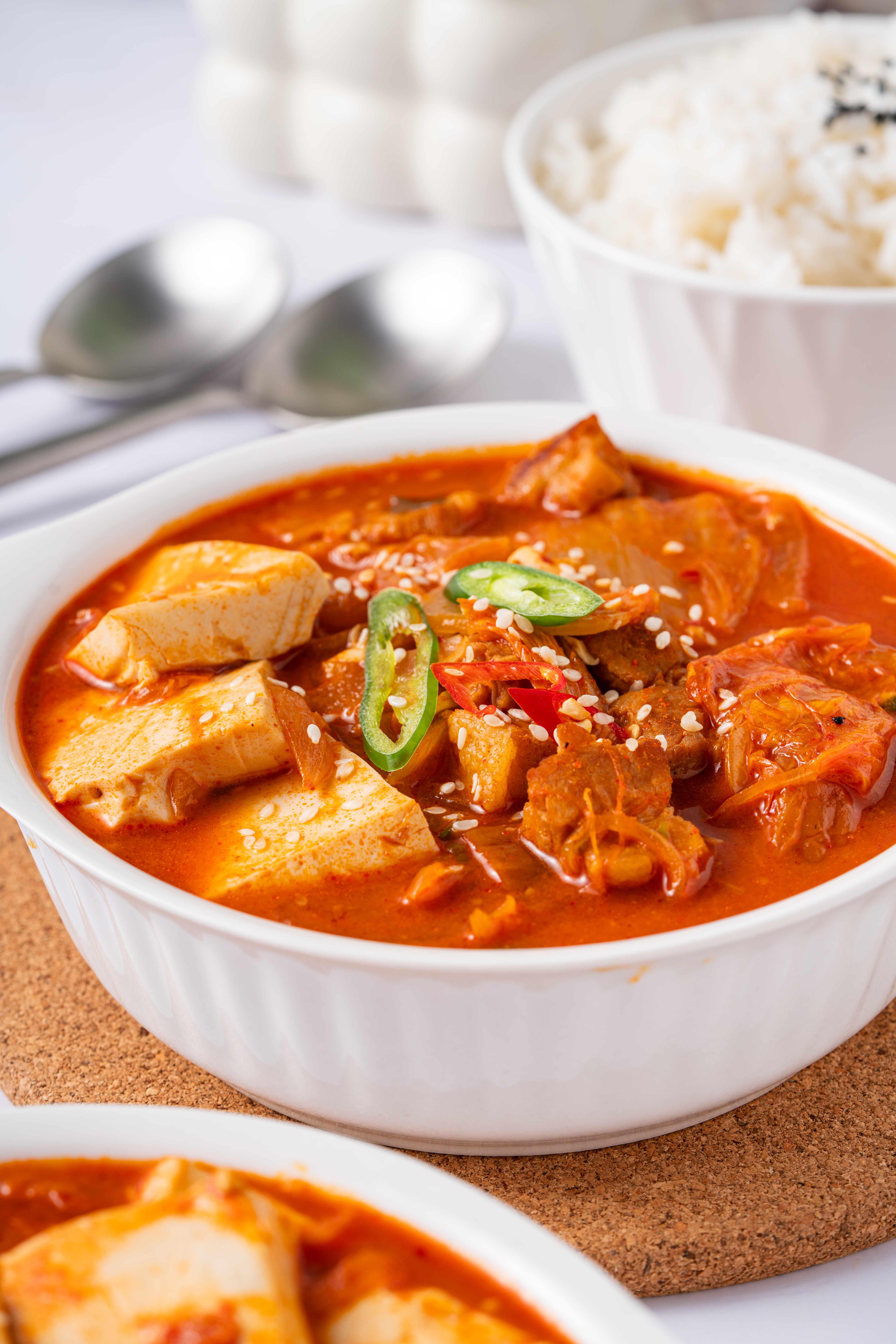
Tangy kimchi, rich pork belly, and silky tofu simmer together in a spicy gochujang broth for a soul-warming bowl that comes together in under an hour.
Kimchi Jjigae Quick Look
- 🕒 Prep Time: 20 minutes
- 🌡️ Cook Time: 40 minutes
- ⏳ Total Time: About 1 hour
- 🍽️ Serving: 4 servings
- ⚡ Calories: 751kcal
- 🌶️ Flavor Profile: Spicy, tangy, and deeply savory with rich pork and silky tofu
- ✋ Difficulty: Easy one-pot stew, on par with our spicy mapo tofu
Quick Answer
To make kimchi jjigae, marinate sliced pork belly in soy sauce and oyster sauce, then stir-fry it until golden. Add chopped kimchi and cook briefly, then add sliced onion and garlic and saute until softened. Stir in gochujang, chili powder, sugar, and fish sauce, pour in water, and bring to a boil. Gently add soft tofu, cover, and simmer on low for about 5 minutes, then garnish with green onion and serve hot with rice.
Jump to:
Why This Recipe Works
Click to see the technique science
- Well-fermented kimchi is key. Older, tangy kimchi brings the deep, sour-savory flavor that gives the stew its signature taste.
- Pork belly adds richness. Fatty pork belly renders down and infuses the whole broth with a rich, meaty depth.
- Gochujang builds the base. Korean chili paste adds spicy heat, color, and a savory umami backbone to the broth.
- Stir-frying the kimchi first. Cooking the kimchi with the pork before adding water concentrates and deepens its flavor.
- Soft tofu keeps it silky. Cubes of soft tofu soak up the spicy broth and add a creamy, melt-in-your-mouth contrast.
- It is a true one-pot meal. Everything simmers together in a single pot, making it an easy, satisfying dinner over rice.
Why You’ll Love This Recipe
- It is bold, spicy, and deeply comforting, the ultimate Korean comfort food.
- It comes together in one pot in under an hour with simple ingredients.
- It is the perfect cozy meal served over a bowl of fluffy rice.
- It is the kind of no fuss win that pairs beautifully with our venison stew on a busy week.
- It earns a spot in the rotation right next to our muffuletta sandwich.
- It is the kind of no fuss win that pairs beautifully with our loaded french fries with cheese and bacon on a busy week.
- It is the kind of no fuss win that pairs beautifully with our homemade strawberry freezer jam on a busy week.
Key Ingredients
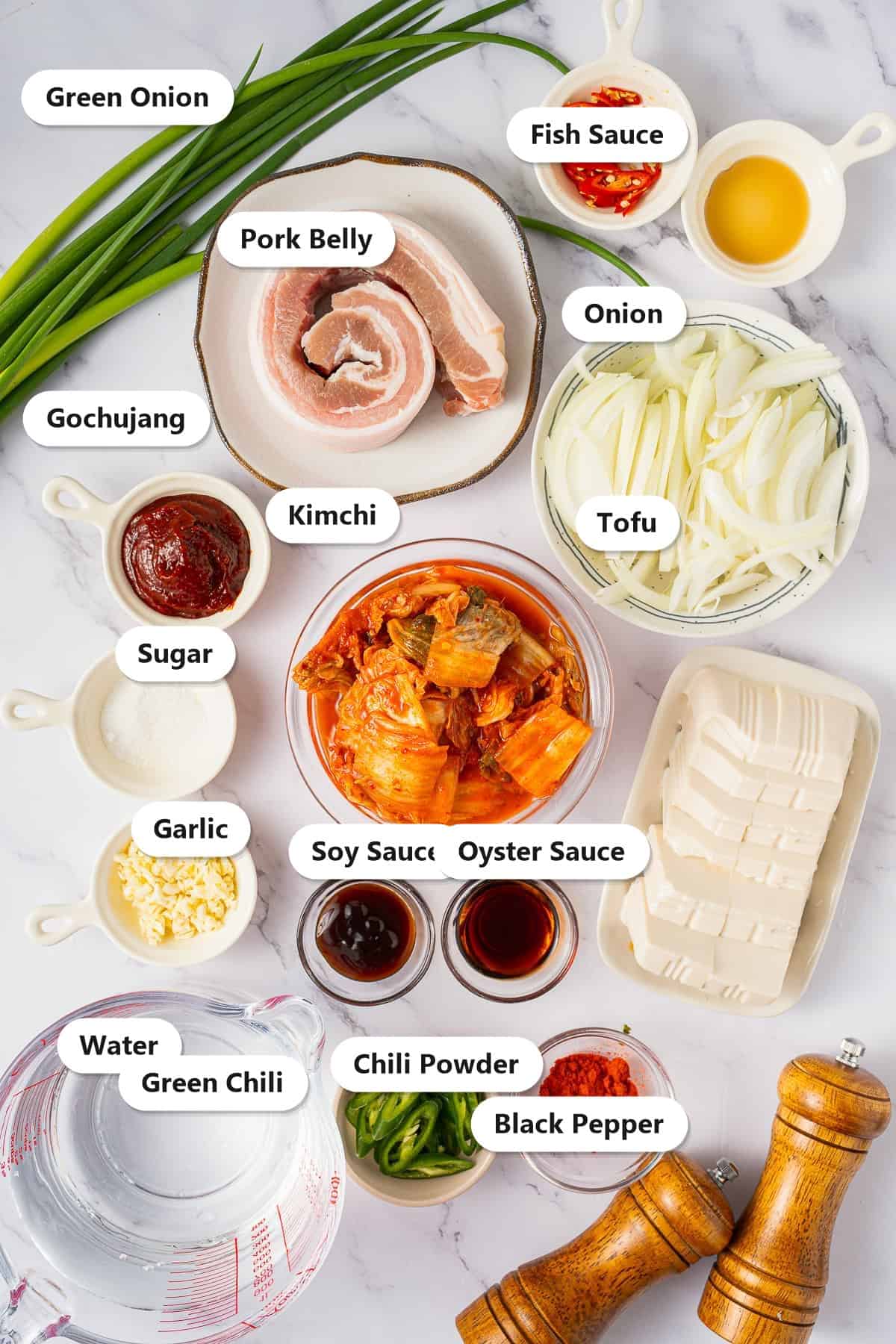
Here is what gives this kimchi jjigae its bold, spicy, savory flavor. See the recipe card for exact amounts.
- Kimchi: Use older, well-fermented kimchi for the deepest, tangiest flavor; it is the heart of the stew.
- Pork belly: Sliced pork belly renders down and gives the broth its rich, meaty depth.
- Gochujang: Korean red chili paste adds heat, color, and a savory umami punch.
- Soft tofu: Silky cubes of soft tofu soak up the spicy broth and add a creamy texture.
- Onion, garlic, and green onion: Aromatics that round out the broth and add fresh flavor.
See recipe card for exact quantities.
Variations and Substitutions
Here are a few easy ways to make this kimchi jjigae your own.
- Swap the protein: Use sliced pork shoulder, beef, canned tuna, or Spam for different classic versions.
- Make it vegetarian: Skip the pork and fish sauce and use extra mushrooms and vegetable broth.
- Add more vegetables: Stir in mushrooms, zucchini, or extra green onion for a heartier pot.
- Adjust the heat: Add more or less gochujang and chili powder to suit your spice level.
- Serve it with a side of our air fryer gyoza for a full Asian-inspired feast.
- For another spin on this idea, try our creamy white bean and pork stew next time.
- In the mood for something different? Our coconut curry salmon scratches a similar itch.
- For another spin on this idea, try our one pan chicken and vegetables next time.
- For another spin on this idea, try our gingerbread men next time.
How to Make Kimchi Jjigae

- Marinate the sliced pork belly in the light soy sauce and oyster sauce, seasoned with salt and pepper, for 20 minutes.

- Heat oil in a pot over medium heat, add the marinated pork belly, and stir-fry until golden brown, then add the kimchi and cook 2 minutes.
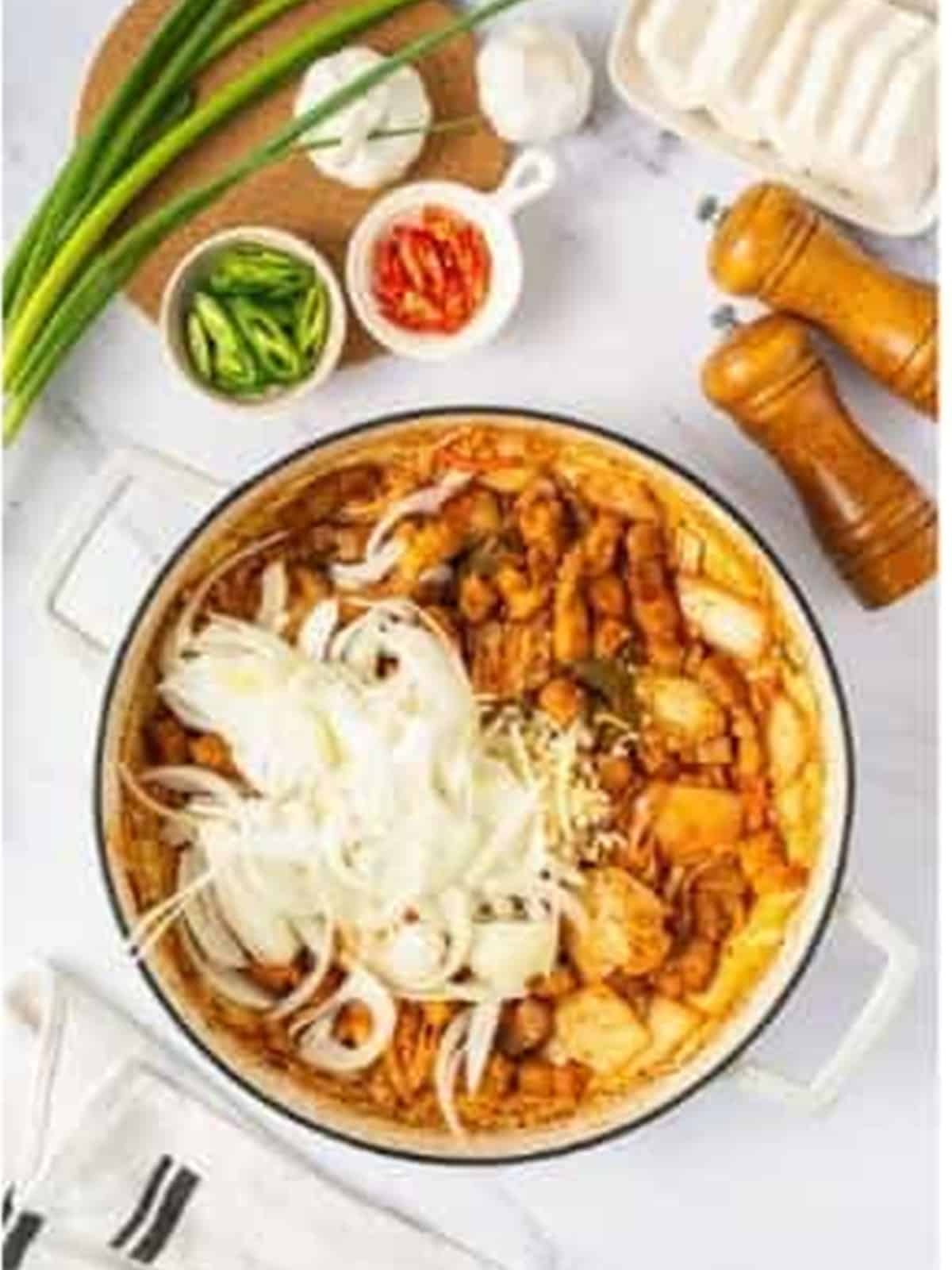
- Add the sliced onion and minced garlic and saute until the onion has softened.

- Stir in the gochujang, chili powder, sugar, and fish sauce until everything is well combined.
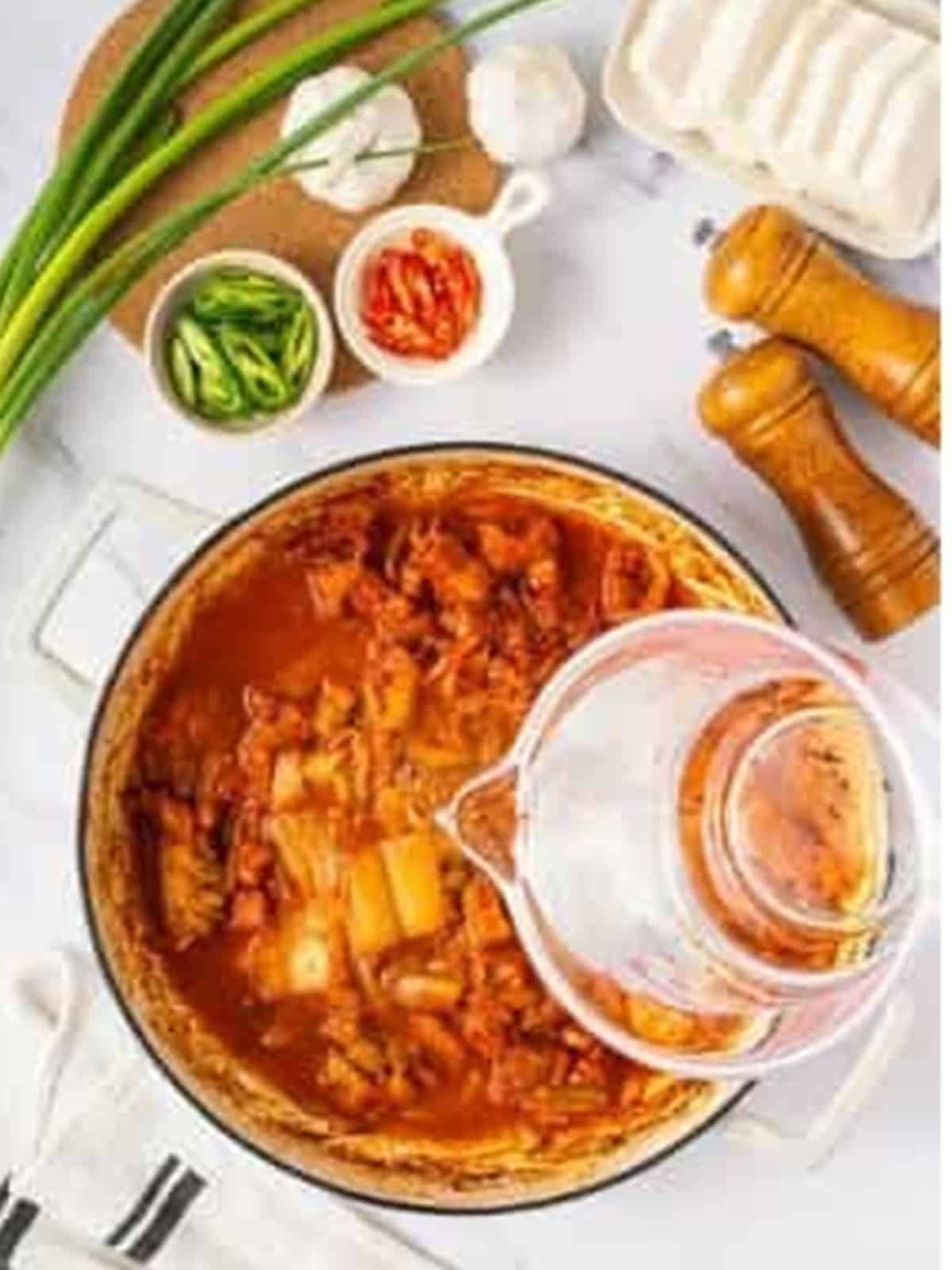
- Pour in the water and bring the stew to a boil.

- Gently add the cubed soft tofu, reduce the heat to low, cover, and simmer for 5 minutes. Garnish with green onion and serve hot with rice.
Recipe Tips & Tricks
- Use sour, well-fermented kimchi for the best flavor; fresh kimchi will taste flat in the stew.
- Stir-fry the pork and kimchi first before adding water to build a deeper, richer broth.
- Add the tofu gently at the end so the delicate cubes do not break apart.
- Adjust the gochujang to control the heat and saltiness to your taste.
- Do not boil hard after adding tofu; a gentle simmer keeps it silky and intact.
- Use the kimchi juice too, since that flavorful brine adds even more tang to the broth.
- Like most stews, kimchi jjigae tastes even better the next day after the flavors meld.
- Double up for gatherings. Serve it alongside our beef stew and watch both disappear.
- Make it a full spread. Our beef stew in the oven rounds out the table.
- Double up for gatherings. Serve it alongside our classic baked mac and cheese and watch both disappear.
Serving Ideas and Suggestions
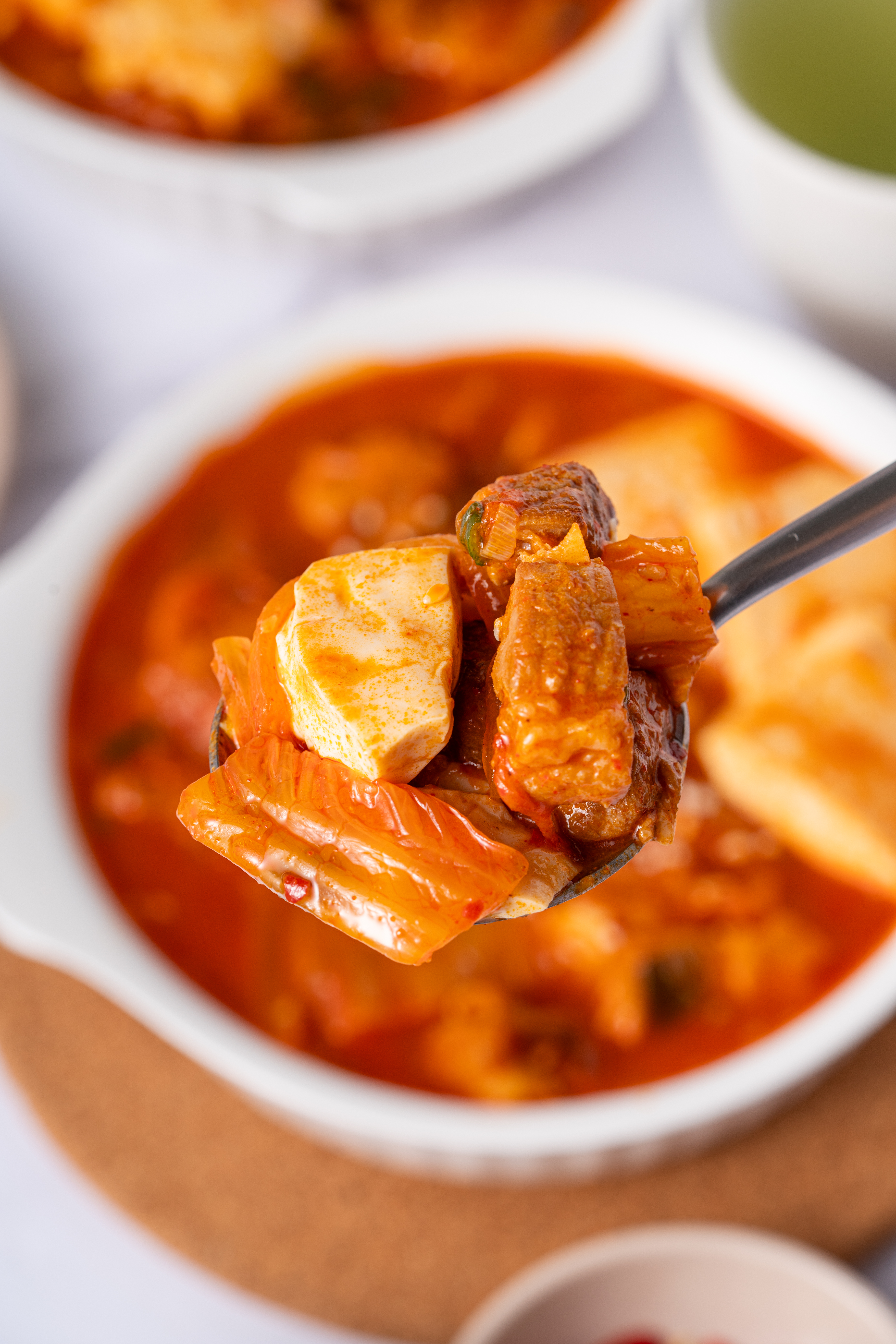
Kimchi jjigae is traditionally served bubbling hot with a bowl of steamed white rice on the side. Spoon the stew over the rice or alternate bites, and finish each bowl with a sprinkle of fresh green onion.
Kimchi Jjigae FAQs
Older, well-fermented, sour kimchi is best for kimchi jjigae. As kimchi ages it develops a deeper, tangier flavor that makes the stew taste rich and complex. Fresh kimchi works in a pinch but the stew will be milder and less flavorful.
Yes. While pork belly is traditional, you can use beef, canned tuna, Spam, or extra tofu and mushrooms instead. For a vegetarian version, skip the pork and fish sauce and use vegetable broth with plenty of mushrooms for umami.
Kimchi jjigae is moderately spicy from the gochujang and chili powder, but you control the heat. Use less gochujang and chili powder for a milder stew, or add more along with fresh chili for extra heat.
Soft or silken tofu is traditional for kimchi jjigae because it stays creamy and soaks up the broth. Add it gently near the end of cooking so the delicate cubes do not break apart. Medium-firm tofu also works if you prefer more structure.
Store leftover kimchi jjigae in an airtight container in the fridge for up to three days; the flavor deepens overnight. Reheat it gently on the stovetop until hot. The tofu may soften further, but the stew will taste even better.
Jjigae is the Korean word for a thick, hearty stew that is typically served bubbling hot and shared at the table. Kimchi jjigae is one of the most popular varieties, made with fermented kimchi as the star ingredient.
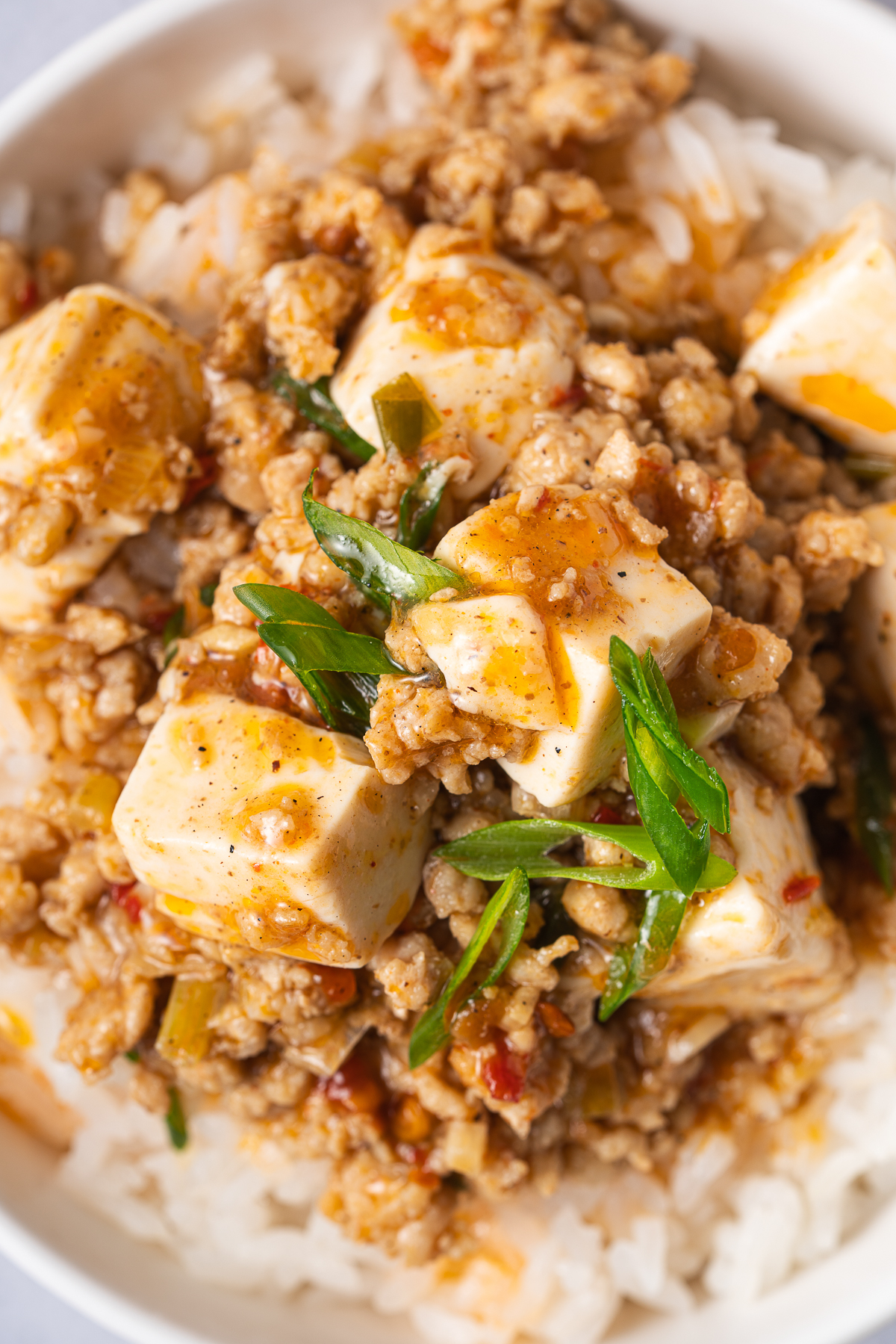


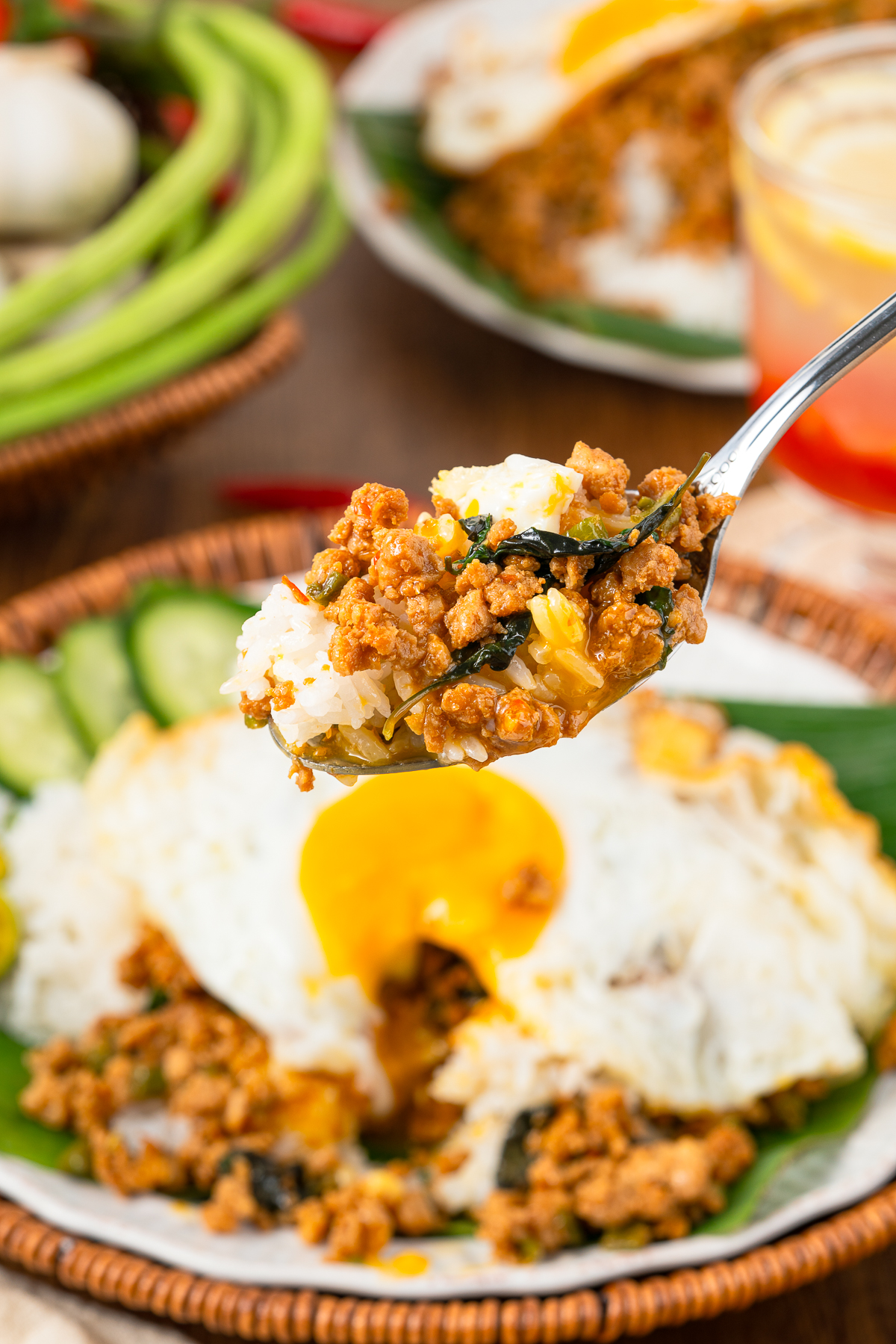
Still filling out the menu? Readers love pairing this one with our Thai red curry soup and our pad kra pao.

Kimchi Jjigae
Ingredients
- 1 lb pork belly cut into ½ inch thick strips
- 1 tablespoon light soy sauce
- 1 tablespoon oyster sauce
- Salt and pepper
- 12 oz kimchi
- ½ tablespoon chili powder
- 1 teaspoon sugar
- 1 large onion sliced
- 4 cups water
- ½ tablespoon fish sauce
- 2 tablespoons gochujang
- 5 cloves garlic minced
- 1 ½ blocks soft tofu cut into ½ inch cubes
Instructions
- Marination of pork belly1 lb pork belly
- In a large bowl, add light soy sauce and oyster sauce to the pork belly. Season with salt and pepper.1 tablespoon light soy sauce, 1 tablespoon oyster sauce, Salt and pepper
- Marinate the pork belly for 20 minutes.
- Kimchi stew
- Heat oil in a pot over medium heat. Add marinated pork belly and stir-fry until golden brown.
- Add kimchi and cook for 2 minutes.12 oz kimchi
- Add sliced onion and minced garlic, then saute until the onion is softened.1 large onion, 5 cloves garlic
- Stir in gochujang, chili powder, sugar and fish sauce. Mix well.½ tablespoon chili powder, 1 teaspoon sugar, 2 tablespoons gochujang, ½ tablespoon fish sauce
- Pour in water and bring to a boil.4 cups water
- Gently add soft tofu, reduce heat to low, and cover the pot. Simmer for 5 minutes.1 ½ blocks soft tofu
- Garnish and serve:
Notes
- Dry pork first. Pat with paper towels for better browning.
- Use medium-high heat when searing to avoid steaming the meat.
- Stir in tofu gently—those cubes are fragile like my feelings when sushi is sold out.
- For extra kick, sprinkle more Korean red pepper flakes right before serving.
- Stew sticking? Scrape the bottom of the pot with a wooden spoon and add a splash more liquid.
- Serve in individual bowls with a mound of hot white rice—the rice soaks up that spicy broth like a sponge.
Nutrition
Love This Recipe?
Follow @ThisSillyGirlsKitchen on Instagram and @ThisSillyGirlsKitchen on Pinterest for more!












Fast and easy recipe